
The Most Expensive Mistakes in Biotech Are Often Regulatory, Not Scientific
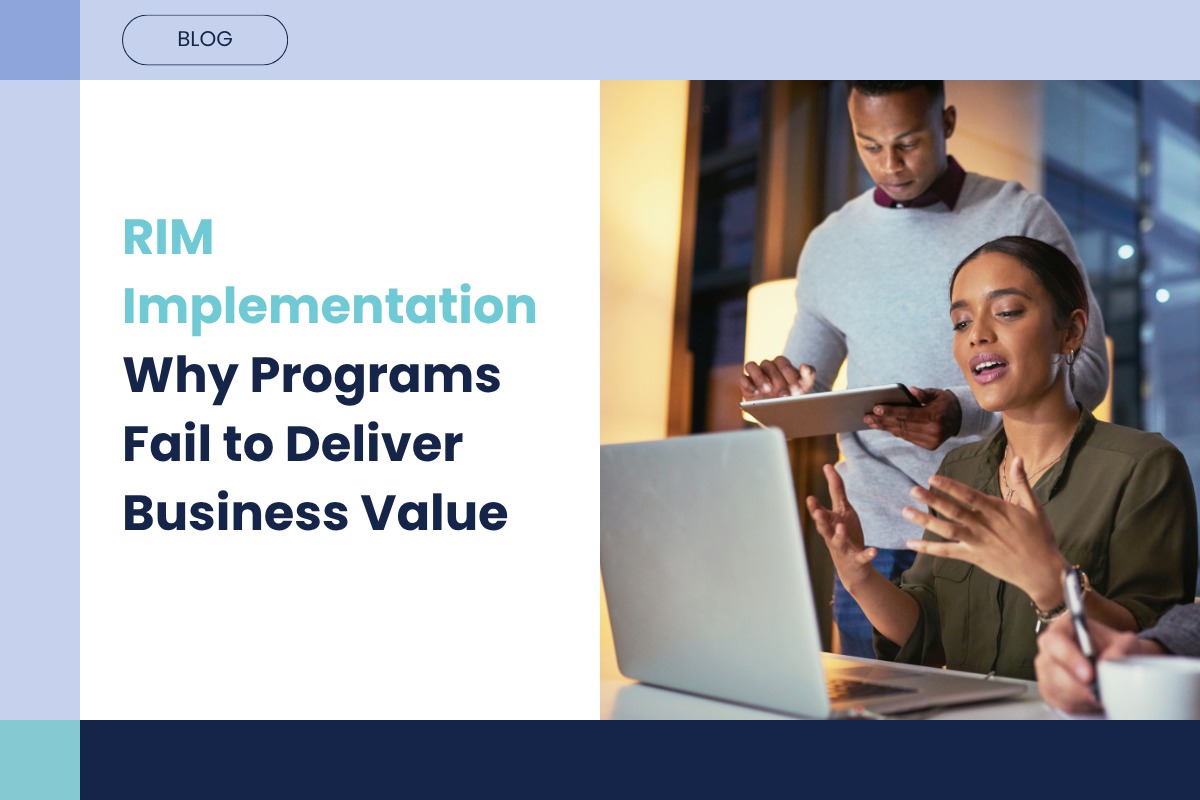
Beyond Implementation: Why Many RIM Programs Fail to Deliver Business Value
25 Aug, 2026
Going live is only the beginning. Lasting RIM value depends on trusted data, clear ownership, user adoption, strong governance, and measurable business outcomes.
Few investments in Regulatory Affairs receive as much attention as a Regulatory Information Management (RIM) implementation. The business case is usually compelling: a single source of truth, improved visibility, better compliance, faster reporting, reduced manual effort, and less reliance on spreadsheets. Significant time and money are invested in selecting the platform, configuring processes, migrating data, and training users. Eventually, the system goes live and the project is declared a success.
Then comes the harder question: are we actually realizing the business value we expected?
In my experience, this is where many organizations struggle. Not because the implementation failed, but because implementation success and business value are not the same thing. A RIM platform can be successfully deployed and still fail to deliver meaningful operational improvements.
Technology Is Rarely the Problem
Most RIM implementations are technically successful. The platform is configured, the data is migrated, and users are trained. Yet months later, many organizations still rely on manual processes, question their data quality, and struggle to demonstrate business value. Teams continue maintaining spreadsheets, manually reconciling information, and creating local trackers because they do not fully trust the data available in the platform.
In most cases, the technology is not the problem. The challenge is that organizations implement a system but fail to operationalize the governance, ownership, and adoption capabilities needed to realize value.
Data Migration Is Not Data Governance
Many organizations invest significant effort in cleansing and migrating data before go-live. Duplicates are removed, historical records are corrected, and migration validation activities are completed. The migration is considered a success. Then, within months, data quality issues begin to reappear.
The reason is simple. Data quality is not a project. It is an operational capability. A single source of truth is not created through migration activities alone. It is created through ongoing ownership, stewardship, governance, and accountability. Organizations that realize lasting value from their RIM investment understand that governance begins after migration is completed, not before. Without clear ownership and controls, even the best migration effort gradually deteriorates as new records are created, regulatory requirements evolve, and users revert to spreadsheets and local workarounds.
Nobody Owns the Data
One of the most common issues I encounter is unclear ownership. Everyone uses the data, but nobody truly owns it. If you are a fan of disruption, try this simple test for data ownership: switch off access to a dataset and see who complains first. The answer often tells you more about ownership than the organization chart does. Product data, registration data, submission data, and Health Authority information often span multiple functions. When data issues arise, it becomes easy to assume that someone else is responsible for fixing them.
In some organizations, ownership has effectively been delegated to “Tom”: the person who knows how everything works and quietly fixes problems when they arise. The challenge is that tribal knowledge does not scale. When Tom leaves, the organization suddenly discovers how much of its operating model existed only in one person’s head.
Successful organizations replace dependencies on individuals with clearly defined ownership, documented processes, and shared accountability. They recognize that a RIM platform cannot become a strategic asset if responsibility for the underlying data remains unclear.
Training Is Not Adoption
Most RIM implementations include training. Far fewer include effective change management. Unfortunately, the two are often treated as if they are the same thing. Once users have completed training, organizations assume adoption will naturally follow. In reality, that is rarely the case. Users may know exactly how to navigate the system and still choose not to use it consistently. Resistance is often not caused by a lack of knowledge. More commonly, it stems from uncertainty around new ways of working, competing priorities, unclear roles and responsibilities, or simply a preference for familiar processes.
Training answers the question: “How do I use the system?” – Change management answers the more important question: “Why should I change the way I work?”
Organizations that realize lasting value from their RIM investment recognize that adoption is an ongoing process. They actively engage stakeholders, address concerns, reinforce desired behaviors, measure adoption, and continuously demonstrate the value the platform brings to users and the broader organization. Many implementations treat go-live as the finish line. In practice, it is often where the most important adoption work begins.
Benefits Are Rarely Measured
Perhaps the biggest reason RIM programs struggle to demonstrate value is surprisingly simple: many organizations never define how value will actually be measured. Instead, they focus on implementation milestones: the system is deployed, data is migrated, users are trained, and validation is completed. While these are important achievements, they are not business outcomes.
Business outcomes are things like reduced manual effort, improved reporting quality, faster submission planning, greater visibility into regulatory activities, improved inspection readiness, and reduced reliance on spreadsheets. If these outcomes are never measured, it becomes difficult to determine whether the investment delivered meaningful value. The organization may have successfully implemented a platform, but nobody can confidently demonstrate that the business is operating more effectively as a result.
Go-Live Is the Starting Line
As Regulatory Affairs becomes increasingly data-driven through initiatives such as IDMP, SPOR, structured content, and AI-enabled processes, the importance of trusted regulatory data will only continue to grow. Many organizations focus on the next technology investment before fully realizing the value of the investments they have already made. The reality is that most RIM programs do not fail during implementation. They struggle after implementation. The organizations that achieve lasting success treat RIM not as an IT project, but as a business capability supported by strong governance, clear ownership, disciplined change management, and continuous improvement.
Ultimately, the difference between a successful RIM implementation and a successful RIM program is not measured by go-live. It is measured by the business value that follows.
How Celegence Helps Organizations Realize RIM Value
At Celegence, we believe successful RIM programs are not defined by go-live dates, completed migrations, or validated systems. They are defined by measurable business outcomes.
Our teams combine deep regulatory expertise, regulatory data management, RIM implementation experience, and change management capabilities to help organizations move beyond implementation and realize lasting value from their investments. From governance and data quality to operating models, adoption, and continuous improvement, we focus on the capabilities required to turn a RIM platform into a strategic business asset.
AUTHORED BY

Senior Manager, RIMS
John Popp

Other Related Articles
19 Aug, 2026

06 Aug, 2026
04 Aug, 2026
15 Jul, 2026
02 Jul, 2026

26 Jun, 2026