Why Regulatory Strategy Is a Capital Allocation Decision
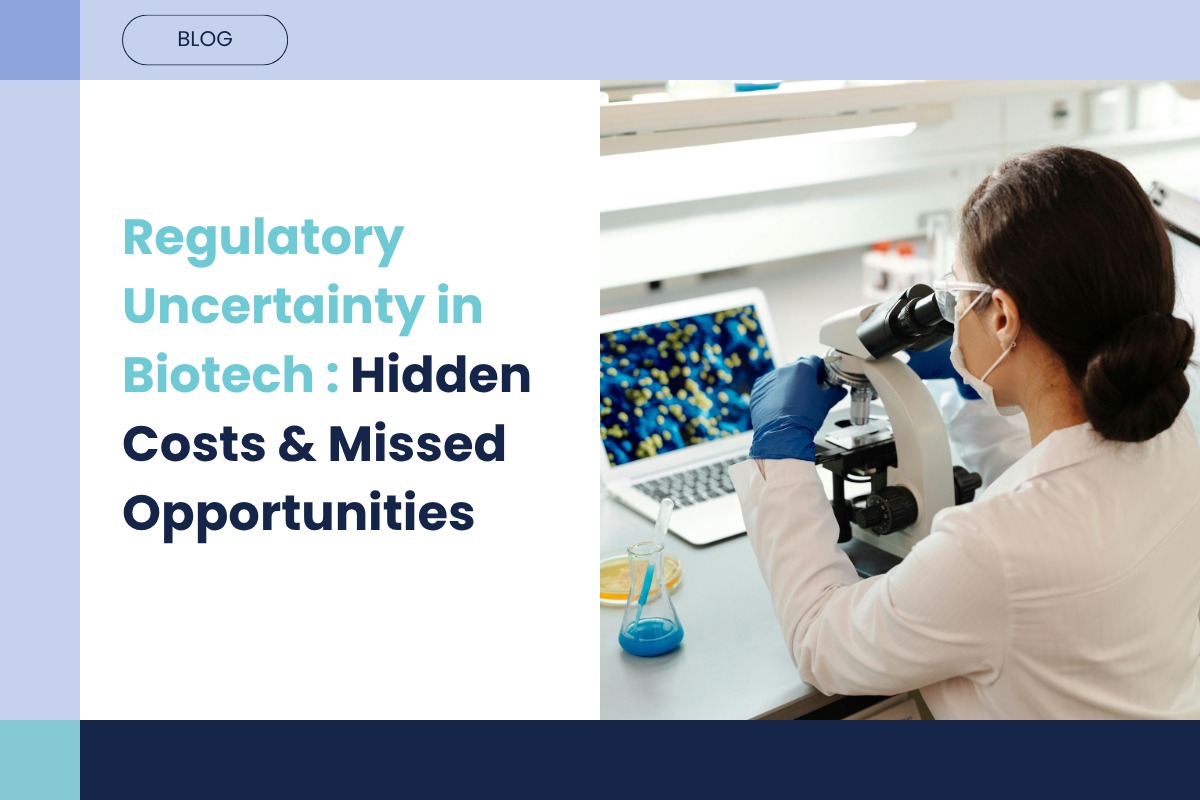
The Hidden Cost of Regulatory Uncertainty and Missed Opportunity in Emerging Biotech
26 Aug, 2026
How earlier regulatory insight can help emerging biotech companies reduce development risk, avoid unnecessary work, identify opportunities, and make better decisions before critical milestones.
In biotech, much of the conversation centers on scientific risk. Will the mechanism work? Will the clinical data be compelling? Will the biology translate into meaningful patient outcomes?
These questions deserve attention. Yet some of the most costly delays in biotech are not caused by scientific failure. They are caused by regulatory uncertainty. The uncertainty that arises when organizations do not fully understand regulatory expectations, evidence requirements, or the downstream consequences of key development decisions.
Unlike a failed clinical study, regulatory uncertainty rarely appears as a headline risk. Instead, it accumulates quietly until it surfaces as delayed milestones, additional studies, unexpected costs, or lost opportunities. By then, the price has already been paid.
The Cost Few Organizations Measure
For emerging biotechs, capital, time, and management attention are all limited resources. When regulatory expectations are unclear, teams often respond in predictable ways:
- Generating additional data “just to be safe”
- Delaying decisions while waiting for greater certainty
- Expanding development activities beyond what is necessary
- Revising plans later in development
- Repeating work that could have been avoided through earlier alignment
None of these actions are inherently wrong. The challenge is that uncertainty often drives conservative decisions that consume resources without proportionally reducing risk. In biotech, avoiding unnecessary work can be just as valuable as completing necessary work quickly.
Regulatory Risk Starts Earlier Than Most People Think
Many organizations associate regulatory risk with submissions and agency reviews. In reality, some of the most important regulatory decisions occur years before an application is filed. For example, when selecting the lead indication, defining the target patient population, establishing the target product profile (TPP), choosing clinical endpoints, designing nonclinical programs, building a scalable CMC strategy, planning regulatory interactions, and assessing opportunities for expedited pathways.
These decisions shape the entire development trajectory. When they are made without sufficient regulatory insight, organizations increase the likelihood of costly course corrections later. The earlier uncertainty is addressed, the greater the flexibility and the lower the cost of change.
Recognizing Opportunity, Not Just Risk
Regulatory expertise is often viewed primarily as a means of avoiding problems. Equally important, however, is its ability to create opportunities.
Programs such as Orphan Drug, Fast Track, Breakthrough Therapy, RMAT, Sakigake, and PRIME can do far more than provide regulatory recognition. They can enhance regulatory engagement, accelerate development timelines, increase investor confidence, strengthen partnering discussions, and improve the overall attractiveness of an asset.
Similarly, while many emerging biotechs focus their regulatory efforts on the FDA and EMA, a broader strategic perspective may reveal opportunities in additional markets. These pathways can support earlier patient access, enable earlier commercialization, generate valuable real-world evidence, and increase optionality for future partnerships or regional licensing agreements.
Regulatory milestones also serve as powerful external validation points. Designation awards, successful agency interactions, agreement on pivotal trial designs, and alignment on innovative development approaches provide independent confirmation that a program is progressing along a credible path. For investors, partners, and potential acquirers, these achievements often signal that development risk is being actively reduced and managed.
The most valuable regulatory opportunities rarely emerge by chance. They require proactive assessment, continuous engagement with the evolving regulatory landscape, and integration into development strategy from an early stage. The cost of regulatory uncertainty is therefore not limited to delays or additional expenditure. It also includes the opportunities missed: opportunities to accelerate development, strengthen market positioning, attract investment, and create incremental value for patients and shareholders alike.
The Often-Overlooked Role of CMC
Another common source of uncertainty is CMC readiness. Clinical development tends to receive most of the attention in early-stage companies, while manufacturing strategy is frequently viewed as a downstream activity. However, regulators evaluate products holistically. Strong clinical data cannot compensate for major manufacturing, quality, or supply readiness gaps. Some of the most preventable development delays occur when CMC risks are identified too late to be addressed efficiently.
Reducing uncertainty in CMC planning is often just as important as reducing uncertainty in clinical development.
The Future of Regulatory Affairs
As drug development becomes increasingly complex, the role of Regulatory Affairs is evolving. Traditionally, Regulatory Affairs has been associated with managing risk, ensuring compliance, and navigating interactions with health authorities. Those responsibilities remain essential. However, forward-looking organizations are increasingly recognizing that regulatory expertise also plays an important role in identifying opportunities.
The most effective regulatory teams help organizations anticipate challenges before they become obstacles, while also identifying pathways that may accelerate development, enable greater flexibility, or strengthen the overall development strategy. Whether through innovative regulatory approaches, early engagement with health authorities, expedited programs, or strategic global planning, regulatory insight can help organizations navigate uncertainty while uncovering new possibilities.
This requires Regulatory Affairs to be integrated throughout development, working closely with clinical, CMC, nonclinical, quality, and commercial teams. When regulatory thinking is embedded early, organizations are often better positioned to make informed decisions, adapt to emerging data, and respond effectively to a rapidly evolving regulatory environment.
Success is no longer defined solely by avoiding setbacks. It is also defined by the ability to recognize opportunities early and act on them with confidence.
Final Thought
Emerging biotech companies devote enormous effort to managing scientific uncertainty. Regulatory uncertainty deserves the same level of attention. Too often, regulatory uncertainty is viewed only as a source of risk. In reality, it is both a risk management challenge and an opportunity management challenge. Left unaddressed, it can lead to delays, rework, and unexpected obstacles. Properly understood, it can reveal pathways to accelerate development, enhance regulatory engagement, and strengthen a program’s long-term prospects.
The most successful organizations are not necessarily those with the fewest regulatory uncertainties. They are often the ones that identify uncertainties early, convert them into actionable insights, and make informed decisions before critical milestones are reached.
Regulatory uncertainty is not simply about what might go wrong. It is also about recognizing what could go right. Organizations that proactively manage both are often better positioned to advance programs efficiently, adapt to change, and bring innovative therapies to patients sooner.
Turn Regulatory Uncertainty into Informed Decisions
For emerging biotech companies, regulatory decisions made early in development can influence clinical strategy, CMC readiness, agency interactions, global pathways, development timelines, and future opportunities.
Celegence works with biotech and pharmaceutical organizations to bring regulatory insight earlier into development—helping teams assess risks, identify opportunities, prepare for Health Authority interactions, and build regulatory strategies aligned with critical development milestones.
AUTHORED BY

SVP, Regulatory Affairs & General Manager
Stef Schutte

Other Related Articles

25 Aug, 2026

20 Aug, 2026
19 Aug, 2026

06 Aug, 2026
04 Aug, 2026
15 Jul, 2026