The Great Convergence — Why 2026 is the Year Regulatory “Records” Die
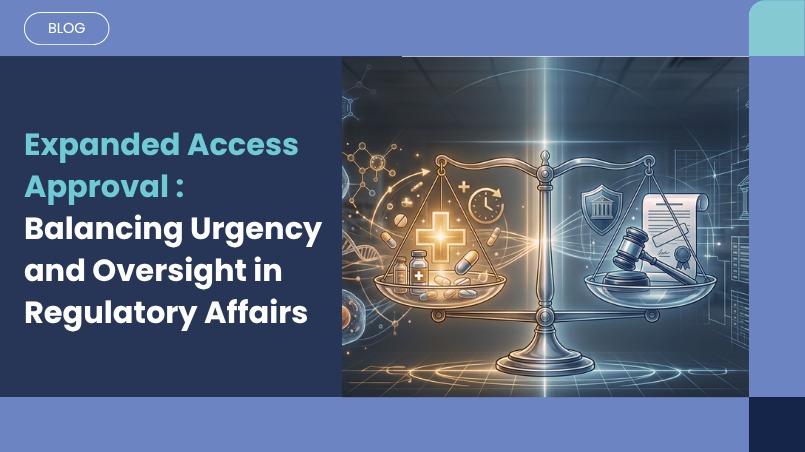
Expanded Access Approval : Balancing Urgency and Oversight in Regulatory Affairs
26 Mar, 2026
Introduction
In the world of regulatory affairs, few topics capture the tension between patient need and regulatory rigor as vividly as Expanded Access approval. Often called compassionate use, this pathway allows patients with serious or life-threatening conditions to receive investigational medical products outside of clinical trials. For regulatory professionals, Expanded Access is both a lifeline and a challenge—requiring careful navigation of ethics, compliance, and science.
The Human Story Behind Expanded Access
Expanded Access programs were born out of urgency. In the 1980s, during the HIV/AIDS crisis, patients demanded access to experimental drugs that offered hope when no approved therapies existed. Regulators responded by creating structured pathways that balanced compassion with oversight. Since then, Expanded Access has become a cornerstone of modern regulatory frameworks, offering patients a chance when time is running out.
How Approval Works : The FDA Example
Expanded Access approval is not a simple “yes” or “no.” It’s a multistep process designed to protect patients while enabling access:
- Physician Request – A treating physician submits a formal application (Form FDA 3926 for individual patients).
- Ethics Review – An Institutional Review Board (IRB) evaluates the request to ensure patient rights and safety.
- Sponsor Agreement – The drug manufacturer must agree to provide the investigational product.
- Regulatory Decision – The FDA reviews the submission, weighing risk versus potential benefit.
- Treatment & Monitoring – The physician administers the therapy and reports adverse events to regulators.
This process ensures that Expanded Access is not a shortcut, but a carefully managed pathway.
Global Perspectives
Expanded Access is not unique to the United States. Around the world, regulators have developed their own frameworks:
| Region | Authority | Key Features |
| U.S. | FDA | Individual, intermediate, and treatment IND pathways |
| Europe | EMA + national agencies | Compassionate use programs coordinated at country level |
| India | CDSCO | Case by case approval, strong emphasis on unmet medical need |
| Japan | PMDA | Expanded Access tied closely to ongoing clinical trials |
For multinational sponsors, understanding these differences is critical to designing global access strategies.
Ethical and Strategic Considerations
Expanded Access raises profound questions for regulatory affairs professionals:
- Equity : How do we ensure fair access across socioeconomic groups?
- Data Integrity : Can real-world evidence from Expanded Access inform regulatory decisions without bias?
- Sponsor Dilemmas : Should companies provide investigational drugs when supply is limited or liability is high?
- Transparency : How do we communicate risks honestly to patients and families desperate for hope?
These questions remind us that Expanded Access is not just a regulatory process—it’s an ethical balancing act.
Case Study : Oncology Access
Consider a patient with advanced cancer who has exhausted all approved therapies. A promising investigational drug is in Phase III trials, but enrollment is closed. Through Expanded Access, the physician petitions the FDA, the sponsor agrees, and the patient receives treatment. While outcomes vary, the pathway itself represents a bridge between science and compassion.
Conclusion
Expanded Access approval is where regulatory affairs meets humanity. It reminds us that behind every submission form and protocol lies a patient, a family, and a story of hope. For regulatory professionals, mastering Expanded Access is more than compliance—it is an act of stewardship, requiring balance between urgency and oversight, compassion and caution, science and ethics.
Celegence contributes to this mission by empowering customers with expert regulatory guidance, streamlined processes, and tailored solutions that reduce complexity while maintaining compliance. By partnering with Celegence, organizations can focus on what truly matters—delivering timely access to lifesaving therapies—while trusting that the regulatory pathway is managed with precision, care, and integrity. In this way, Celegence helps transform Expanded Access from a regulatory requirement into a bridge of hope for patients and families worldwide.
Contact us at info@celegence.com.
AUTHORED BY

Associate II - Technical Writing
Shwetha Baliga B

Other Related Articles
24 Feb, 2026

06 Feb, 2026

16 Dec, 2025