Optimizing Systematic Literature Reviews for CERs: Common Deficiencies and How to Avoid Them
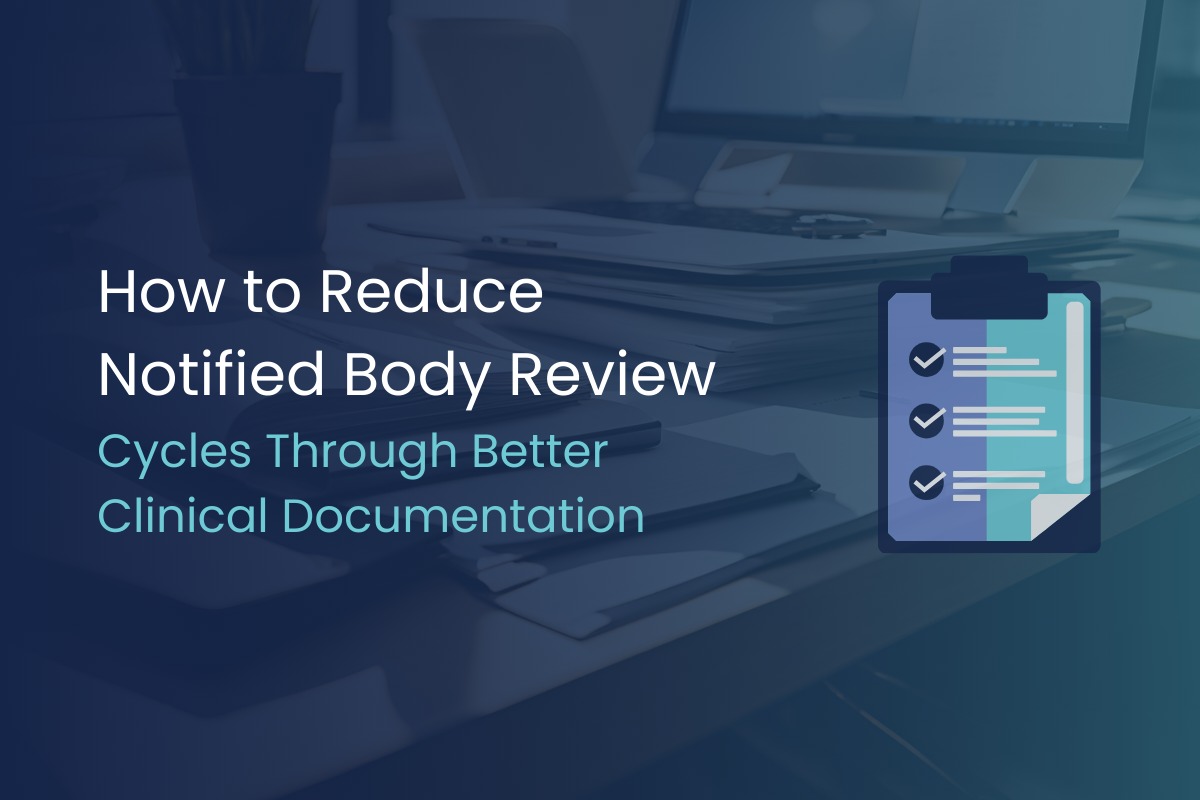
How to Reduce Notified Body Review Cycles Through Better Clinical Documentation
18 Mar, 2026
Under the European Medical Device Regulation (MDR), the review of clinical documentation by a Notified Body is one of the most critical steps in achieving CE certification. However, since the implementation of Regulation (EU) 2017/745 on medical devices, manufacturers have experienced longer review timelines, multiple rounds of questions, and increased scrutiny of their clinical evidence.
Documents such as the Clinical Evaluation Plan (CEP), Clinical Evaluation Report (CER), Post-Market Clinical Follow-up (PMCF) plan, and State-of-the-Art (SoTA) analysis must demonstrate a clear, traceable, and scientifically justified evaluation of safety and performance.
Although each Notified Body may emphasize slightly different aspects, several recurring observations appear across nearly all MDR assessments.
- Clinical Evaluation Deficiencies
- Weak clinical evidence
- Lack of measurable clinical endpoints
- Poorly documented literature searches
- Risk Management Gaps
- Incomplete hazard identification
- Risk control measures not verified
- Missing linkage to clinical evaluation
- Post-Market Surveillance Weaknesses
- PMS plans lacking clear data sources
- PMCF activities not well justified
- Limited real-world evidence integration
- Technical Documentation Issues
- Missing device descriptions
- Incomplete design verification data
- Lack of traceability between documentation sections
- Labeling and Claims Misalignment
- Marketing claims not supported by clinical evidence
- Inconsistencies between IFU, CER, and risk management documentation
In such cases, Notified Bodies often issue multiple requests for clarification. By improving the quality and structure of clinical documentation, manufacturers can significantly reduce review cycles and accelerate regulatory approval. Below are a few measures that can be followed to address these observations.
Establish Clear and Measurable Clinical Objectives
One of the most common deficiencies observed during Notified Body reviews is the use of vague or non-measurable clinical objectives. Statements such as “demonstrate safety and performance” are too broad and do not allow an objective evaluation of clinical data.
Clearly defined objectives allow reviewers to understand exactly how safety, performance, and clinical benefits are being evaluated. They also enable a transparent comparison between the subject device and the current clinical standards of care.
Consolidate the State-of-the-Art Analysis
The State-of-the-Art (SoTA) analysis plays a crucial role in demonstrating how the device fits within current clinical practice. Many Notified Body questions arise when the SoTA is incomplete, outdated, or not adequately justified.
A comprehensive SoTA analysis should describe the current treatment landscape, including alternative therapies, competing medical devices, and established clinical guidelines. It should also identify the expected safety and performance benchmarks derived from published evidence.
A well-developed SoTA provides the foundation for defining acceptance criteria for clinical endpoints. It also helps demonstrate that the benefits of the device outweigh the risks when compared with available treatment options.
Define Acceptance Criteria Based on Clinical Evidence
Acceptance criteria are essential for determining whether the clinical data demonstrate adequate safety and performance. However, Notified Bodies often challenge acceptance criteria that appear subjective or lack scientific justification.
To avoid this issue, acceptance criteria should be derived from the State-of-the-Art analysis and supported by published clinical evidence. For example, acceptable complication rates may be based on ranges reported in peer-reviewed clinical studies or established treatment guidelines.
Providing a clear rationale for each acceptance criterion helps demonstrate that the evaluation is grounded in current clinical practice and not based on subjective judgment.
Implement a Transparent Literature Search Strategy
A robust literature search is essential for demonstrating that the clinical evaluation is based on comprehensive and unbiased evidence. Notified Bodies frequently question clinical evaluations that lack transparency in the literature search methodology.
Manufacturers should clearly document the databases used for the literature search, such as PubMed, Google Scholar, Embase, and Cochrane Library. In addition, the search strings, inclusion and exclusion criteria, screening and appraisal process, and justification for excluded articles should be presented.
Using a structured screening process and presenting the results in a flow diagram allows reviewers to understand how relevant literature was identified and evaluated. This level of transparency significantly reduces the likelihood of additional queries from the Notified Body.
Ensure Traceability Across Clinical and Technical Documentation
Another common reason for repeated review cycles is the lack of alignment between clinical documentation and other technical files. The Clinical Evaluation Report should not be treated as a standalone document; it must be fully integrated with the broader regulatory documentation.
Another common reason for repeated review cycles is the lack of alignment between clinical documentation and other technical files. The Clinical Evaluation Report should not be treated as a standalone document; it must be fully integrated with the broader regulatory documentation.
Establishing clear traceability between the Clinical Evaluation Plan, CER, risk management documentation, and post-market surveillance reports ensures that all information presented to the Notified Body is consistent and scientifically justified.
Strengthen Equivalence Justifications
For many legacy devices, manufacturers rely on equivalence to existing devices in order to demonstrate clinical performance. However, equivalence claims are frequently challenged during Notified Body reviews because they require a high level of supporting evidence.
To successfully demonstrate equivalence, manufacturers must establish similarities across technical, biological, and clinical characteristics. This typically requires detailed information about the equivalent device, including materials, design, and intended use.
If sufficient documentation is not available to support equivalence, manufacturers may need to supplement the clinical evaluation with additional clinical data or post-market evidence.
Provide a Structured Benefit–Risk Evaluation
A comprehensive benefit–risk analysis is a central requirement of MDR clinical evaluations. The analysis should clearly demonstrate how the clinical benefits of the device outweigh the associated risks when compared with current treatment options.
This evaluation should integrate information from the risk management process, clinical literature, and post-market data. A structured approach that systematically compares benefits and risks helps provide a clear and defensible conclusion regarding the overall clinical acceptability of the device.
Integrate Post-Market Clinical Data
Post-market surveillance and Post-Market Clinical Follow-up activities are increasingly important under MDR. Notified Bodies expect manufacturers to incorporate real-world clinical data into their clinical evaluations whenever possible.
Sources of post-market evidence may include complaint data, vigilance reports, data from clinical registries, and PMCF studies. When analyzed systematically, these data provide valuable insights into the long-term safety and performance of the device.
Incorporating post-market data not only strengthens the clinical evaluation but also demonstrates that the manufacturer maintains a proactive and continuous oversight of the device throughout its lifecycle.
Improve the Clarity and Structure of Clinical Writing
Finally, the clarity of the clinical documentation itself plays a significant role in reducing review cycles. Even when adequate evidence is available, poorly structured or ambiguous documentation can lead to unnecessary questions from the Notified Body.
Using clear headings, distinguishable tables, and concise explanations helps reviewers quickly understand how the clinical evaluation has been conducted. Each conclusion presented in the CER should be supported by explicit references to the underlying clinical data.
Well-organized documentation reduces the cognitive burden on reviewers and improves the overall efficiency of the assessment process.
Conclusion
Most non-conformities raised by Notified Bodies do not stem from the absence of data but from poor documentation structure, insufficient justification, or lack of traceability between documents. Manufacturers that invest in well-structured, transparent, and scientifically justified clinical evaluations are more likely to experience smoother interactions with their Notified Bodies.
By defining measurable clinical objectives, strengthening State-of-the-Art analyses, ensuring traceability across documentation, and integrating post-market evidence, manufacturers can significantly reduce the number of review cycles required for approval.
Ultimately, better clinical documentation not only accelerates regulatory timelines but also strengthens the overall evidence supporting the safety and performance of medical devices.
How Celegence Can Support
Celegence supports medical device manufacturers in strengthening clinical documentation to meet EU MDR expectations and reduce Notified Body review cycles. Our team works closely with organizations to develop well-structured, traceable, and scientifically justified documentation across the entire clinical evaluation lifecycle.
With CAPTIS®, our AI-enabled regulatory authoring platform, we help streamline literature assessment, improve evidence traceability, and maintain consistency across documentation—supporting faster review cycles and stronger submission outcomes.
If you would like to strengthen your clinical documentation, contact us at info@celegence.com.
AUTHORED BY

MANAGER/SENIOR SME, MEDICAL DEVICE SERVICES
Dr. Kasturi Rao

Other Related Articles
19 Aug, 2026

13 Aug, 2026
13 Aug, 2026
06 Aug, 2026

04 Aug, 2026

29 Jul, 2026