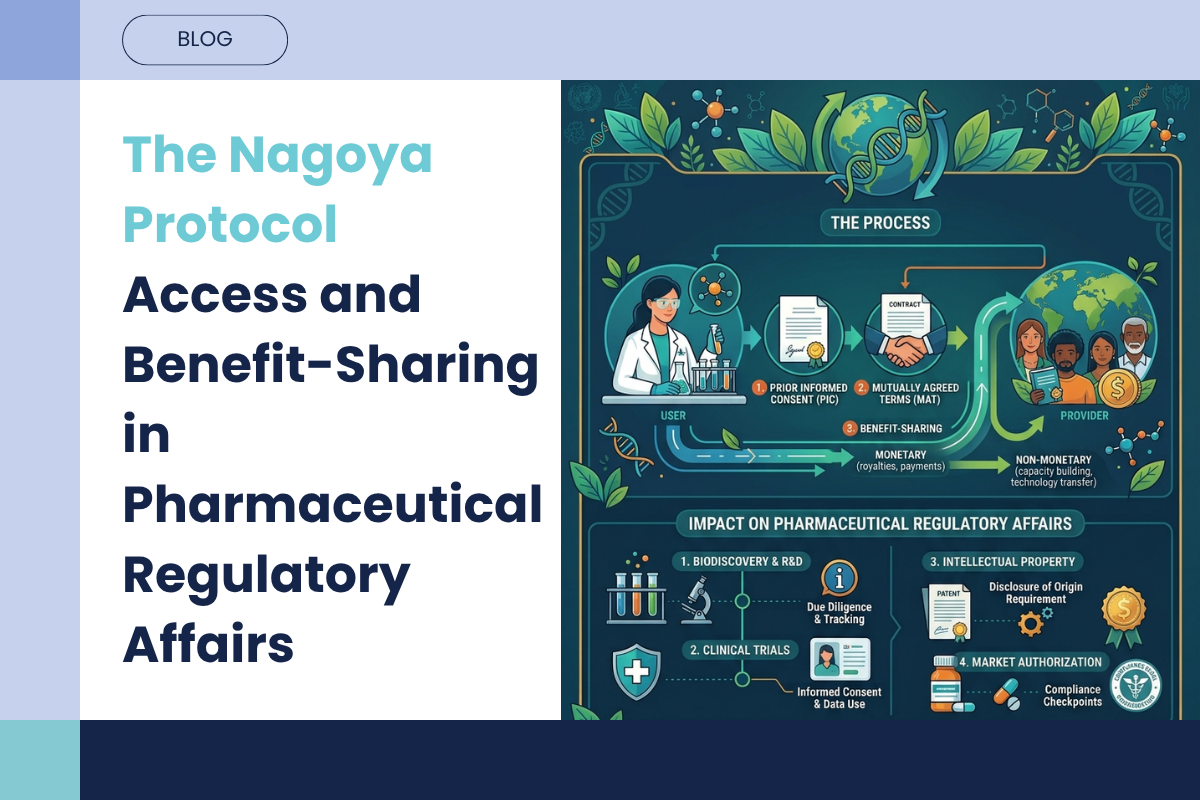
Navigating the Nagoya Protocol in Pharmaceutical Regulatory Affairs
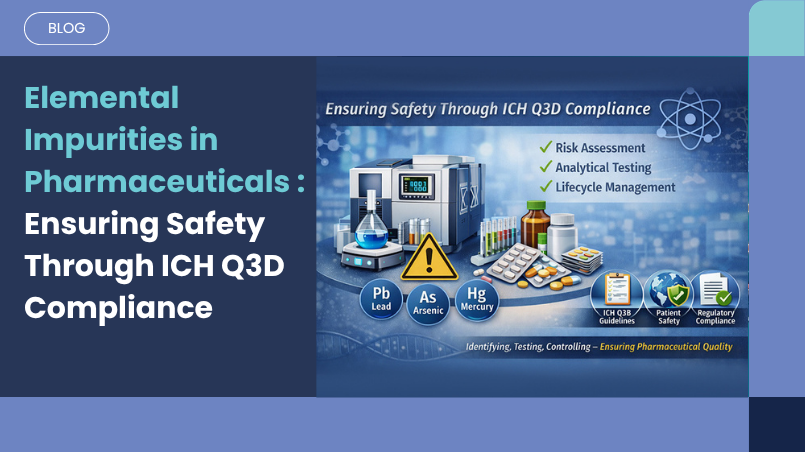
Heavy Metals in Pharmaceuticals: A Critical Quality and Safety Imperative
10 Apr, 2026
Introduction
Heavy metals are dense metallic elements that can cause toxicity even at very low concentrations. Common examples include lead, mercury, cadmium, and arsenic. In pharmaceuticals, these are addressed under the broader term elemental impurities, which also includes other potentially toxic elements such as nickel and chromium that may enter medicines unintentionally through raw materials, manufacturing processes, utilities, equipment, or packaging.
Because even trace exposure can lead to neurotoxicity, nephrotoxicity, carcinogenicity, or sensitisation, regulators require strict control. Over the past decade, outdated nonspecific “heavy metal tests” have been replaced by a science-based framework defined primarily by ICH Q3D (R2) and implemented through compendial standards such as USP <232> / USP <233> and the European Pharmacopoeia General Chapter 5.20. These establish toxicologically derived Permitted Daily Exposure (PDE) limits and require a lifecycle, risk-based control strategy.
Modern Understanding of Elemental Impurities
Historically, “heavy metals” were measured using crude colorimetric tests that did not identify individual elements or link limits to toxicology. This approach lacked precision and scientific justification.
Modern regulation defines specific elemental impurities – metals and metalloids that may originate from:
- API synthesis (e.g., Pd, Pt, Rh, Ru, Ni, Co catalysts)
- Mineral excipients (talc, bentonite, calcium carbonate, kaolin)
- Manufacturing equipment (e.g., stainless steel containing Cr and Ni)
- Utilities and water systems
- Container-closure systems (glass, elastomers, pigments, coatings)
Even low-level, chronic exposure may pose cumulative risk, which is why PDEs are extremely stringent.
Under ICH Q3D (R2), elements are classified by toxicity and likelihood of occurrence:
- Class 1: As, Cd, Hg, Pb (highest toxicity, always assessed)
- Class 2A: Co, Ni, V (likely to occur)
- Class 2B: Pd, Pt, Rh, Ru, Os, Ir (catalyst-related)
- Class 3: Cr, Cu, Mn, Mo, Sn (lower oral toxicity)
The Global Regulatory Framework
ICH Q3D (R2) forms the global foundation for elemental impurity control. It establishes:
- 24 specific elements
- Route-specific PDEs (oral, parenteral, inhalation)
- Mandatory product-specific risk assessments
- Lifecycle management expectations
Both the FDA and EMA have adopted these principles. In the US, USP <232> sets limits aligned with Q3D, while USP <233> requires validated analytical methods such as ICP-MS or ICP-OES. The European Pharmacopoeia mirrors this framework.
The result is a harmonised global system applicable to innovator products, generics, veterinary medicines, and lifecycle changes.
Risk Assessment: The Core Requirement
Every API and finished product requires a documented risk assessment aligned with ICH Q9 principles. This includes evaluation of:
- API synthetic routes and catalyst use
- Raw materials and excipients (especially mineral-derived)
- Equipment and manufacturing processes
- Utilities and water systems
- Container-closure systems
- Storage conditions
For APIs, focus is placed on catalyst carryover and shared equipment. For finished products, excipient variability often drives risk. Supplier data, historical trends, and route-specific PDEs must be considered.
The outcome is a product-specific impurity profile identifying which elements require control or testing.
Confirmatory Testing and Analytical Control
If risk cannot be excluded, confirmatory testing is required. Regulators expect sensitive, validated ICP-based methods capable of detecting ng/g levels.
Testing may target:
- Final drug product
- High-risk excipients
- Catalyst-associated APIs
- Packaging interactions
If results consistently demonstrate levels well below PDEs, reduced testing frequency may be justified. Borderline results, however, require investigation, strengthened controls, or process redesign.
Risk Mitigation Strategies
API Controls
- Optimise or substitute metal catalysts
- Improve purification (e.g., scavengers, recrystallisation)
- Strengthen cleaning and equipment controls
Excipients and Suppliers
- Risk-based supplier qualification and audits
- Element-specific specifications where needed
- Switch to lower-risk grades or sources if necessary
Manufacturing and Equipment
- Upgrade contact surfaces or coatings
- Optimise pH, temperature, and hold times to minimise leaching
- Monitor utilities for elemental content
Specifications and Quality Systems
- Set justified specifications when warranted
- Validate ICP methods per compendial requirements
- Embed control into the pharmaceutical quality system
- Reassess risk following material, process, or site changes
CTD Documentation and Lifecycle Management
Regulators expect transparent documentation within CTD Modules 3.2.S and 3.2.P, clearly describing:
- Identified risks
- Justification for inclusion/exclusion of each element
- Testing strategy
- Overall control approach
- Ongoing monitoring plan
Changes affecting elemental impurity levels—such as new suppliers, synthetic routes, excipient grades, equipment, or packaging—must trigger reassessment. Depending on impact, variations (EU Type IA/IB/II) or US post-approval supplements may be required.
Lifecycle oversight ensures impurity control remains aligned with evolving manufacturing and regulatory expectations.
Key Challenges
Managing elemental impurities is technically demanding because:
- Mineral excipients show natural variability
- Catalyst residues depend on process efficiency
- Equipment corrosion depends on processing conditions
- Highly sensitive ICP methods require expertise
- Mitigation steps may affect other critical quality attributes
Balancing impurity control with product performance and regulatory commitments requires structured quality risk management and cross-functional oversight.
Special Situations
In oncology products for advanced disease, regulators may apply a benefit–risk perspective consistent with ICH S9. In limited cases, marginal exceedances may be justified with strong clinical rationale.
For inherently toxic APIs or narrow therapeutic index drugs, total safety burden must be considered. Even then, structured risk assessment and CTD justification remain mandatory.
Expectations for Generic Manufacturers
Generic applicants must perform product-specific assessments reflecting their own API sources, excipients, processes, and packaging. Copy-paste risk assessments or reliance solely on supplier declarations are inadequate.
Because generics often differ from reference products, confirmatory testing is frequently required. Weak or superficial justifications are increasingly challenged by regulators.
Future Outlook
Advances in analytical sensitivity, increased scrutiny of packaging-derived impurities, and greater focus on high-risk populations (e.g., paediatric and inhalation patients) are shaping the next phase of regulation.
Manufacturers investing in predictive risk models, robust supplier oversight, and integrated quality systems can reduce unnecessary testing while maintaining strong patient protection.
Conclusion
Elemental impurities remain a critical pharmaceutical quality and safety concern. Together, ICH Q3D (R2), USP <232> / USP <233>, and the European Pharmacopoeia provide a harmonised, health-based framework built on risk assessment, robust analytical control, and lifecycle management.
A proactive, science-driven strategy ensures regulatory compliance, protects patients, and supports uninterrupted global market supply.
How Celegence Can Support
Celegence supports pharmaceutical companies in developing and implementing compliant, risk-based strategies for managing elemental impurities across the product lifecycle. Our regulatory and scientific teams help ensure alignment with ICH Q3D (R2), USP <232>/<233>, and global health authority expectations.
Our support includes:
- Product-specific elemental impurity risk assessments aligned with ICH Q9 principles
- Gap analysis and remediation strategies for APIs and finished products
- CTD Module 3 documentation support for regulatory submissions
- Supplier qualification and data evaluation for excipients and raw materials
- Analytical strategy support, including ICP-MS/ICP-OES method considerations
- Lifecycle management support for post-approval changes and variations
By combining regulatory expertise with structured processes and technology-enabled services, Celegence helps organizations maintain compliance while reducing unnecessary testing and operational burden.
To learn more, contact us at info@celegence.com.
AUTHORED BY

Associate II, Technical Writing
Yeragonda Chandrakala

Other Related Articles
02 Jul, 2026

26 Jun, 2026

05 Jun, 2026
07 May, 2026