"*" indicates required fields
A Strategic Guide to PMS, eAF, ePI, eCTD 4.0. and ESMP
21 May, 2026
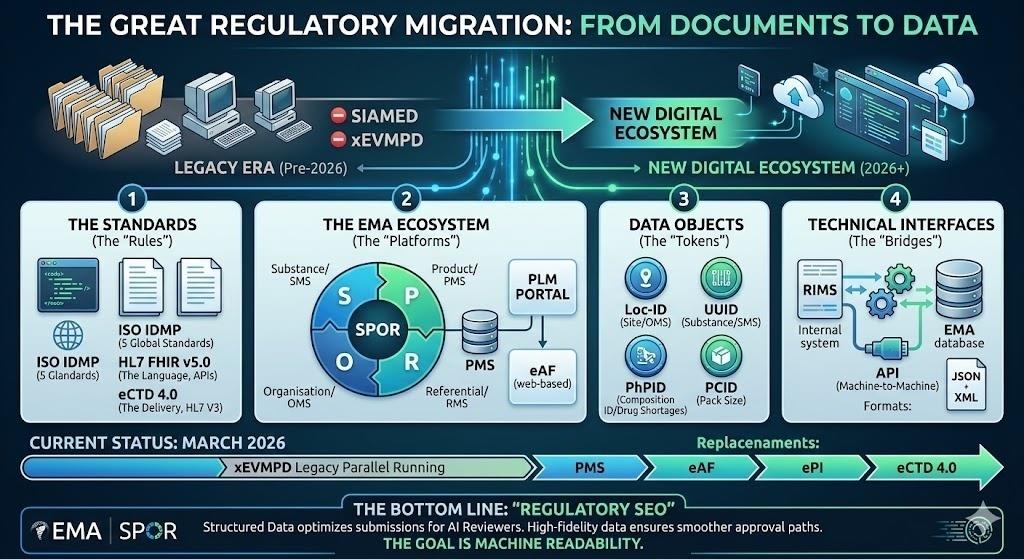
The regulatory landscape in 2026 is no longer defined by the thickness of a dossier, but by the integrity of a data stream. As the European Medicines Agency (EMA) moves toward a fully integrated digital ecosystem, we are witnessing a fundamental shift: the transition from “Document Vaults” to “Structured Data Objects.”
For Regulatory Affairs (RA) professionals, this isn’t just a technical upgrade – it is a complete reimagining of how we identify, track, and approve medicinal products. Here is your strategic guide to the pillars of this transformation.
-
The Standards: Learning a New Language
To participate in the new ecosystem, we must speak its language. The “Rules” are now governed by three major frameworks:
- ISO IDMP: This is the foundation. It’s a suite of five global standards that ensure a “Tablet in Berlin” is described exactly the same way as a “Tablet in Oslo.”
- HL7 FHIR (v5.0): If IDMP is the vocabulary, FHIR is the grammar. It is the technical standard for exchanging healthcare information. Version 5.0 is our target for full “Write” capabilities, allowing our internal systems to talk directly to regulatory databases.
- eCTD 4.0: The next generation of submissions. By moving to HL7 V3 messaging, eCTD 4.0 allows for document reuse, meaning you don’t just “upload a file”; you reference a data object.
-
The EMA Ecosystem: The “Digital Twin”
The EMA has built a sophisticated infrastructure to house this data, collectively known as SPOR. Think of SPOR as the central nervous system of European regulation:
- S (Substance): Every ingredient gets a unique ID (SMS).
- P (Product): The PMS (Product Management Service) is the heart of the operation, replacing legacy systems like SIAMED and xEVMPD.
- O (Organisation): Unique IDs for every site and company (OMS).
- R (Referential): Standardized lists for dosage forms and units (RMS).
The PLM Portal acts as the new front door, where the web-based eAF (Electronic Application Form) lives. Crucially, the eAF is no longer a blank form; it “pulls” data directly from the PMS. If your data in the PMS is wrong, your application will be too.
ePI is to modernize the statutory product information (SmPC, Package Leaflet, and Labeling) into a structured, machine-readable XML format.
ESMP is a mandatory IT platform (as per Regulation (EU) 2022/123) aimed at providing a coordinated EU-wide response to drug shortages. The ESMP relies on PMS (Product Management Service) data. For a product to be monitored in the ESMP, its pack size data (PCIDs) and manufacturing site info (Loc-IDs) must first be enriched and validated in the PMS.
-
Data Objects: The Tokens of Compliance
In the new world, we don’t manage folders; we manage Tokens. These identifiers are the keys to global interoperability:
- Loc-ID: The digital fingerprint of your manufacturing site.
- UUID: The unique code for your substances.
- PhPID: A breakthrough for public health, this ID identifies the composition of a drug, allowing for the global tracking of drug shortages.
- PCID: The unique identifier for every specific pack size.
-
Technical Interfaces: Building the Bridges
The goal for 2026 is Machine-to-Machine (M2M) communication.
Through APIs (Application Programming Interfaces), your internal Regulatory Information Management System (RIMS) can send data directly to the EMA. While IT handles the “pipes” (the JSON/XML code), Regulatory Affairs remains the guardian of the “water” (the accuracy of the data values).
-
Proactive Oversight: ePI & ESMP
The 2026 roadmap introduces two critical platforms that leverage this structured data for public health:
- ePI (Electronic Product Information): Replacing static PDFs with XML-based leaflets. Patients can scan a 2D barcode to receive real-time, digital safety updates.
- ESMP (European Shortages Monitoring Platform): A mandatory platform for monitoring drug supply. The ESMP consumes data from the PLM/PMS flow to detect supply gaps before they become crises. It relies on your PCIDs and Loc-IDs to map the supply chain in real-time.
The Status Report:
As of March 2026, we are in the “Parallel Running” phase. xEVMPD is still active, but it is being systematically replaced by the PMS.
The transition is now mandatory for several critical components:
- eAF: Variations must now be managed via the web-based tool.
- ePI: Moving toward Electronic Product Information, where SmPCs are structured XML data rather than static PDFs.
- eCTD 4.0: The aging v3.2.2 standard is officially handing over the baton to the HL7 V3-powered future.
Quick-Reference: “What are we actually doing?”
| Legacy World (Pre-2026) | New Digital World (2026+) |
|---|---|
| Filling out a PDF Application | Submitting a Data Object via the PLM Portal |
| Updating an Article 57 entry | Synchronizing a FHIR Message via API |
| Describing a site in text | Referencing a Loc-ID from OMS |
| Submitting an SmPC PDF | Submitting ePI (XML) snippets |
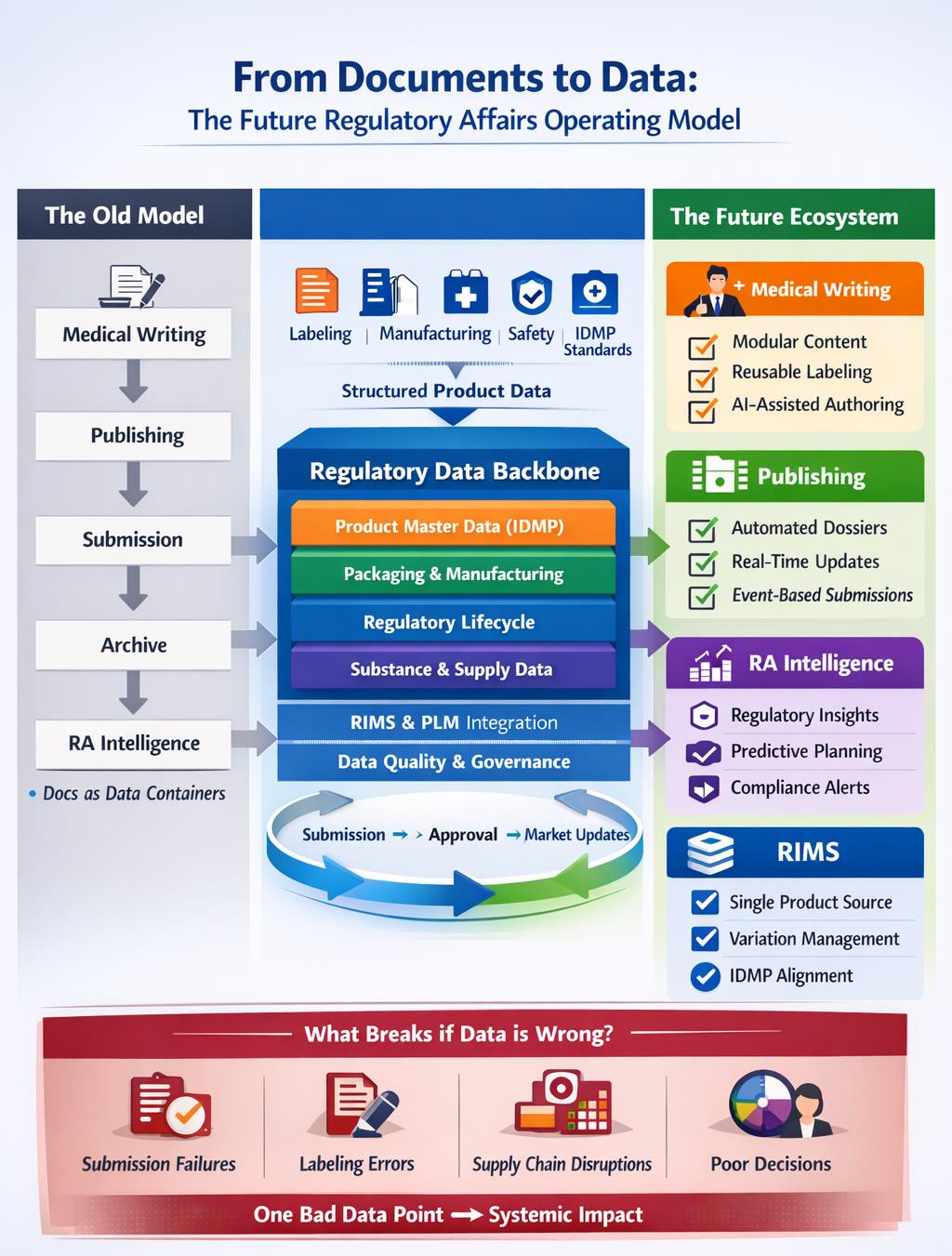
Top 3 Risks for IT/Reg Alignment:
- Referential Mismatch: Regulatory uses an old term for “Tablet” that isn’t in the RMS (Referential Management Service), causing the API to reject the whole submission.
- Loc-ID Gaps: The manufacturing site isn’t registered in OMS, so the Packaging data cannot be completed in the PMS.
- FHIR Versioning: The IT team builds for FHIR v4.0, but the EMA shifts the mandatory requirement to v5.0 (scheduled for late 2027).
Conclusion: The “Regulatory SEO” Era
Why is the EMA pushing so hard for structured data? The answer is Machine Readability.
Regulatory agencies are increasingly deploying AI tools to analyze submissions. By providing structured data, you aren’t just filing a report; you are optimizing your submission for an AI-assisted reviewer. Think of it as “Regulatory SEO”—the higher the quality of your structured data, the smoother your path to approval.
Are You Still Filing Records, or Are You Managing Data?
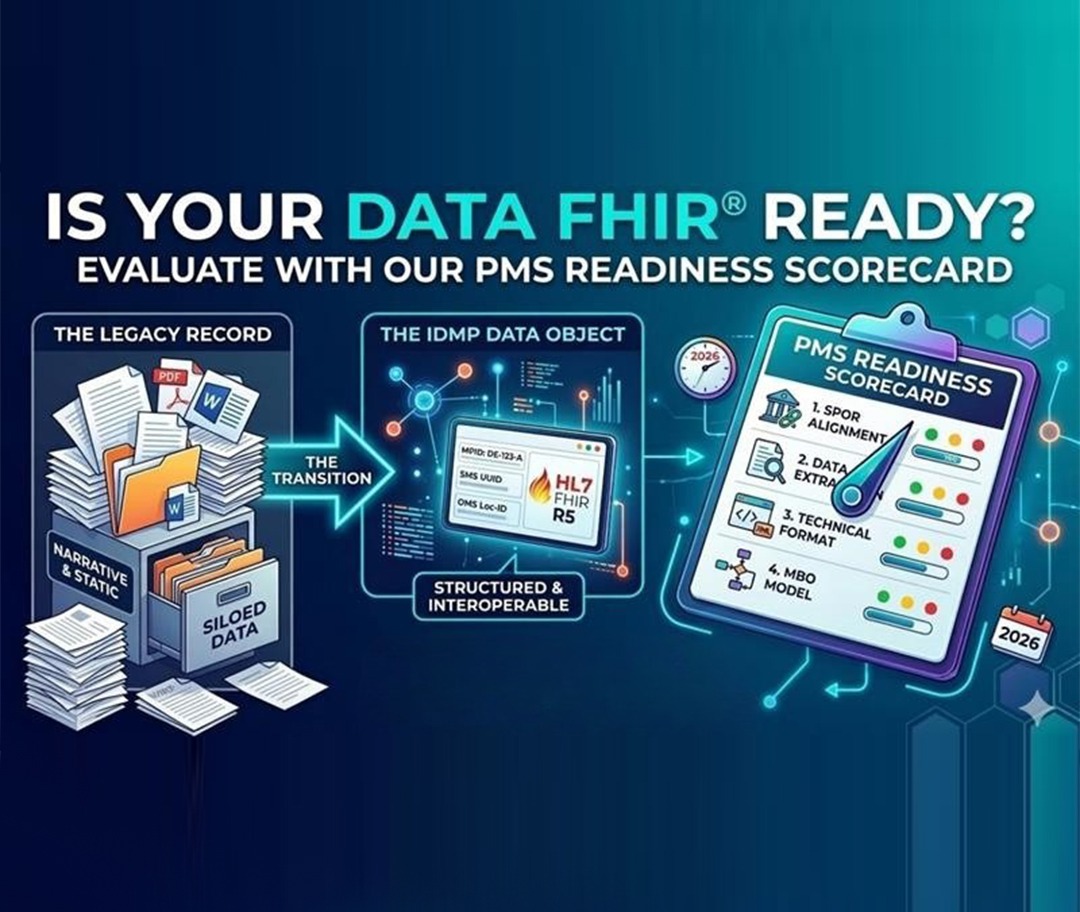
To help you identify exactly where your team stands, download your Free IDMP & PMS Compliance Checklist use this tool to evaluate your current state.
Are you looking for an extended team to ensure stable compliance and high-quality data? To learn more contact us at info@celegence.com. Let’s discuss how we can turn your regulatory records into a strategic data advantage.
AUTHORED BY

SENIOR SME, RIMS
Sowmya Raju


Other Related Articles
15 Jul, 2026
02 Jul, 2026

26 Jun, 2026

05 Jun, 2026
07 May, 2026

10 Apr, 2026