Navigating the Nagoya Protocol in Pharmaceutical Regulatory Affairs
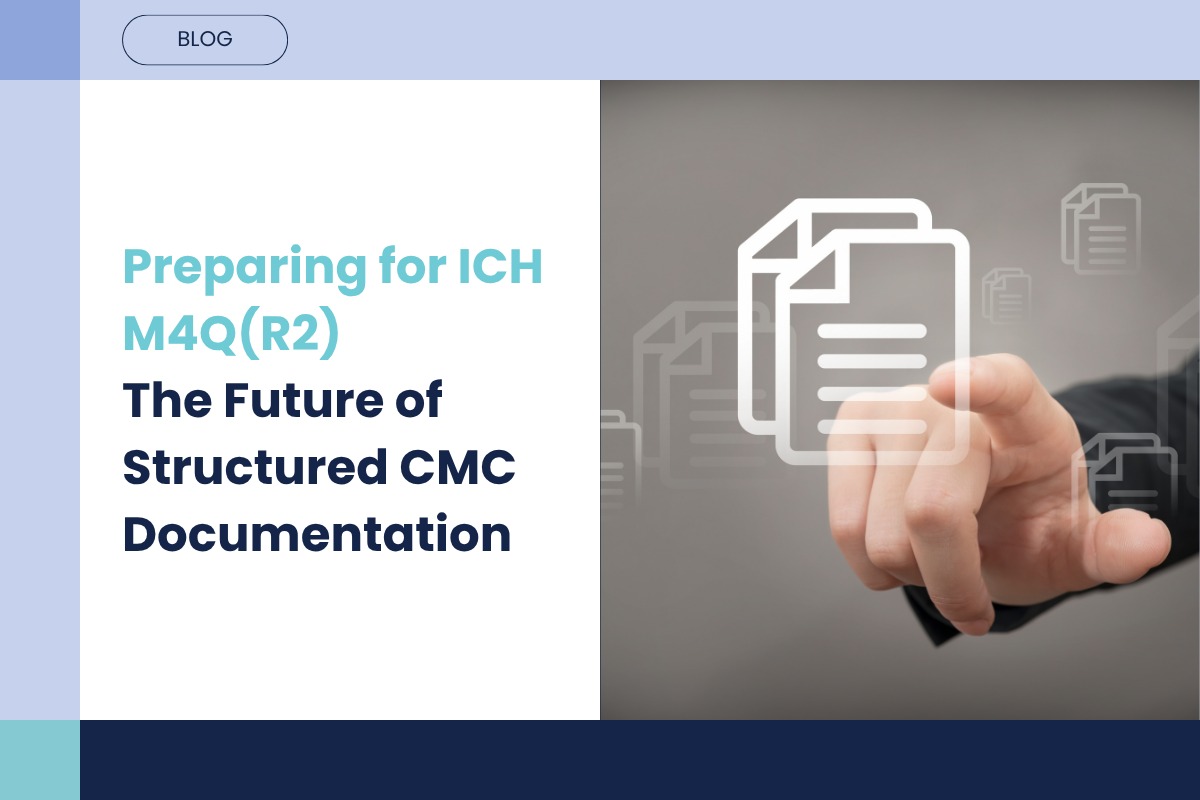
ICH M4Q(R2): Why the Future of CMC Is About Structured Quality Information
04 Aug, 2026
CMC Is Entering a New Era
For more than 20 years, pharmaceutical companies have relied on ICH M4Q(R1) as the foundation for organizing quality information within regulatory submissions. Since then, products have become more complex, global regulatory expectations have evolved, and lifecycle management has become significantly more demanding.
The proposed ICH M4Q(R2) guideline represents more than an update to submission content – it introduces a new way of thinking about how quality information is created, maintained, and reused throughout a product’s lifecycle. The scope is expanded to Biologics, Small molecules, vaccines, Advanced therapy medicinal products (ATMPs), etc.
For regulatory affairs, CMC, and quality teams, the question is no longer whether M4Q(R2) will influence operations, but how prepared they are for the transition.
From Static Documents to Structured Quality Knowledge
Traditional CMC documentation often presents the same information across multiple documents, markets, and lifecycle activities.
As products evolve, this creates challenges such as:
- Duplicate content across submissions
- Lengthy document updates
- Inconsistent product information
- Increased review cycles
- Higher risk during lifecycle maintenance
M4Q(R2) represents a fundamental evolution in how pharmaceutical quality information is created, managed, and submitted. It moves the industry beyond a document-centric mindset where each submission often requires significant duplication and manual updates towards a knowledge-centric approach built on structured, interconnected quality information.
This enables organizations to organize, justify, maintain, and reuse regulatory content more effectively, ensuring greater consistency across dossiers, simplifying lifecycle management, and improving traceability of scientific data and regulatory decisions. As health authorities continue to advance digital assessment capabilities and structured data exchange, M4Q(R2) provides the framework needed to support more efficient submissions, reduce regulatory burden, and enable a future where regulatory information is managed as a strategic enterprise asset rather than a collection of static documents.
Why Regulatory Expectations Are Changing
Health authorities are looking beyond individual submissions and expect manufacturers to demonstrate:
- Consistency throughout the product lifecycle
- Clear scientific justification
- Traceable changes
- Efficient lifecycle management
- High-quality documentation that remains inspection-ready
The introduction of Core Quality Information (CQI), Development Summary and Justification (DSJ), and Product Lifecycle Management (PLCM) demonstrates the evolution of regulatory submissions from document-based dossiers to structured quality knowledge that is maintained, justified, and reused throughout the product lifecycle. Rather than treating each submission as an independent collection of documents, these concepts promote a connected information model where foundational quality knowledge, development rationale, and lifecycle commitments are managed in a structured and consistent manner.
This not only enhances the clarity and scientific integrity of regulatory submissions but also improves traceability, facilitates efficient implementation of post-approval changes, and enables the reuse of validated information across products, markets, and submission types.
As regulatory systems continue to embrace structured content and digital review capabilities, these concepts provide the foundation for more agile, transparent, and knowledge-driven regulatory operations.
The Opportunity Goes Beyond Compliance
Many organisations initially view M4Q(R2) as another regulatory requirement, but this really offers an opportunity to improve operational efficiency.
Organisations that modernise their CMC documentation strategy can benefit from:
- Faster authoring cycles
- Improved document consistency
- Reduced duplication of effort
- Better collaboration across functional teams
- Simpler lifecycle updates
- Greater submission readiness
- Eliminating redundancies and promotes cross-referencing
The greatest value comes from building quality information once and maintaining it consistently throughout the product lifecycle.
Preparing Your CMC Team Today
Although implementation timelines continue to evolve, preparation should begin well before adoption becomes mandatory. Pharmaceutical companies should evaluate:
Current authoring processes
How much manual effort is required to prepare and update Module 3 documentation?
Content consistency
Is the same quality information maintained consistently across products, markets, and submissions?
Lifecycle management
Can changes be efficiently propagated throughout existing documentation?
Technology readiness
Do existing tools support structured authoring, version control, collaboration, and reuse?
Risk- and Science-Based Documentation
- Encourages justification based on scientific knowledge and quality risk management.
- Supports enhanced product and process understanding rather than relying solely on prescriptive documentation.
The Role of AI in Modern CMC Authoring
As regulatory documentation becomes more structured, AI can support not replace regulatory professionals.
Purpose-built AI solutions can help teams:
- Accelerate content development
- Improve consistency across submissions
- Identify conflicting information
- Support structured content reuse
- Reduce repetitive manual work
- Help maintain document quality over time
Regulatory expertise remains central to every submission. AI enables experts to spend less time on repetitive documentation activities and more time on scientific evaluation, regulatory strategy, and quality decision-making.
M4Q(R2) Is Part of a Larger Regulatory Transformation
M4Q(R2) aligns with a broader industry movement toward:
- Digital regulatory information
- Structured content
- Lifecycle-focused submissions
- Greater global harmonization
- More efficient regulatory operations
Organisations that begin adapting now will be better positioned to respond as regulatory expectations continue to evolve.
Rather than treating M4Q(R2) as another compliance exercise, companies can use it as an opportunity to modernise how they create, manage, and maintain CMC documentation.
Preparing for What’s Next
The transition to M4Q(R2) is about more than updating templates. It requires a shift in how quality information is authored, governed, and maintained throughout the product lifecycle.
By strengthening documentation processes today, pharmaceutical companies can improve submission readiness, reduce lifecycle complexity, and build a sustainable foundation for future regulatory requirements.
Want to understand what M4Q(R2) means for your organisation?
Ready to Modernise Your CMC Documentation Strategy? We Deliver the Outcome.
Preparing for ICH M4Q(R2) requires more than updating documents – it requires a strategy for managing quality information throughout the product lifecycle.
At Celegence, our regulatory experts combine deep CMC knowledge with AI-accelerated authoring to help pharmaceutical companies develop high-quality regulatory documentation, improve consistency, and stay ready for evolving global requirements.
Whether you’re planning for M4Q(R2), strengthening your CMC operations, or looking to optimise lifecycle management, we’re here to partner with you on the journey.
AUTHORED BY

Director, Pharmaceutical Regulatory Services
Pradeep Gangavaram

Other Related Articles
02 Jul, 2026

26 Jun, 2026

05 Jun, 2026
07 May, 2026
10 Apr, 2026