EU MDR Checklist: Technical Documentation Requirements for Medical Device Manufacturers
Drug-Device Combination Products: Is Your Device Strategy Keeping Pace with Your Drug Development?
06 Aug, 2026
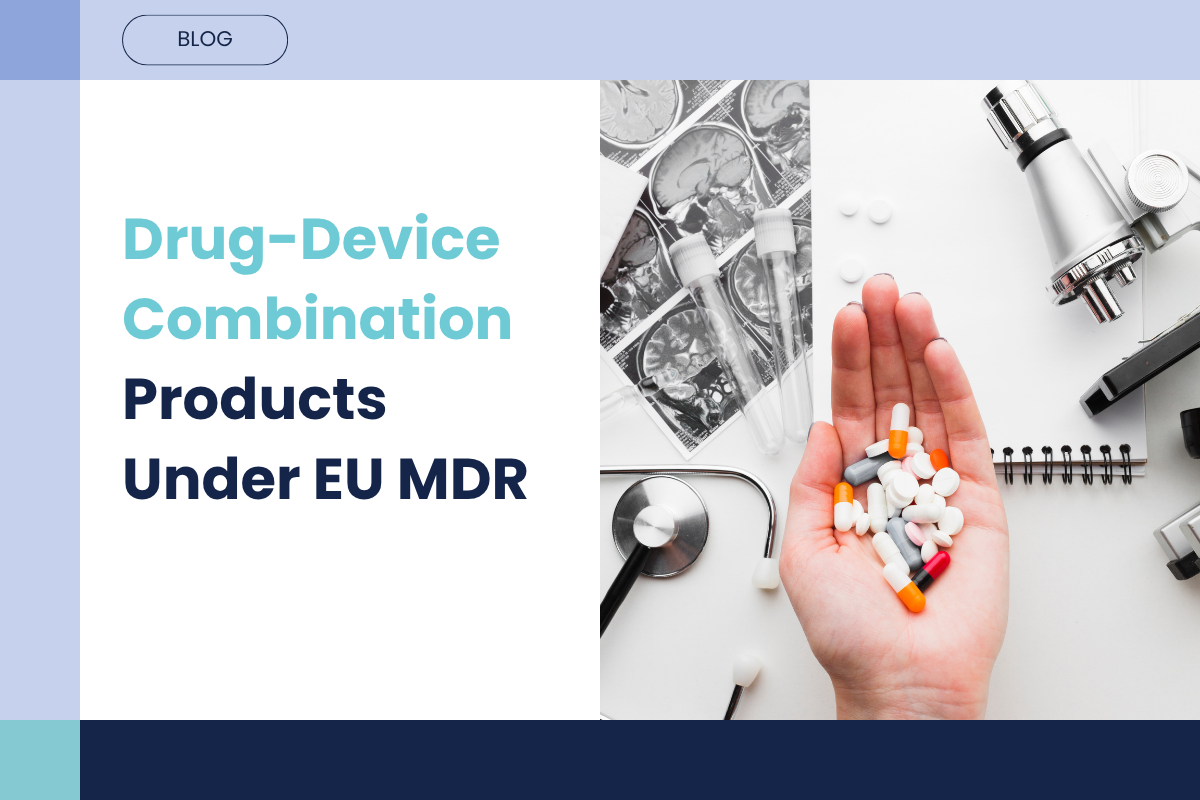
Drug-Device combination products are a unique category of products in the constantly evolving regulatory world. A combination product is essentially any product that includes a combination of drug, device, and/or biologic constituents that are either a single entity, co-packaged, or packaged separately but intended to be used together to achieve the intended clinical outcomes. Inhalers, prefilled insulin pens, drug-eluting stents, autoinjectors, infusion systems, and transdermal delivery platforms are some widely used combination products integral to modern therapeutic delivery. In the EU, the combination products are regulated through medicinal and device regulations depending on the primary mode of action (PMOA).
Manufacturers invest significant time and resources into proving the safety, efficacy, and quality of the medicinal/biologic product. The device constituent often does not receive the same level of attention.
The Device Is No Longer “Just the Delivery System”
Not long ago, the delivery device was often viewed as exactly that – a mechanism for administering the medicine. Now, regulators see it very differently. The medicine may demonstrate strong effectiveness, but if the delivery device is difficult for patients to use, prone to user errors, or does not perform reliably, it can negatively impact patient safety and the overall success of the treatment.
The device is expected to have robust evidence demonstrating that it is designed, verified, and validated for safe and effective use, and the documentation must be maintained through its entire lifecycle.
Why Are So Many Companies Still Being Caught Off Guard?
Organizations with strong pharmaceutical expertise often underestimate the level of scrutiny applied to the device constituent. This is particularly evident under the European Union Medical Device Regulation (EU MDR), where Article 117 introduced additional requirements that many pharmaceutical teams had not previously encountered.
Instead of reviewing only the medicinal product, regulators now expect comprehensive evidence covering areas such as:
- Clinical Evaluation
- Risk Management
- Human Factors and Usability Engineering
- Design Verification and Validation
- Technical Documentation
- General Safety and Performance Requirements (GSPRs)
- Notified Body Opinion (NBOp)
For teams unfamiliar with medical device regulations, this can significantly expand the scope of regulatory preparation.
Regulatory Delays Are Often Documentation Problems – Not Product Problems
A common misconception is that regulatory approval delays happen because the product does not meet the required standards. However, many delays occur because manufacturers identify missing or incomplete documentation only at later stages of development.
For example:
- Clinical Evaluation was not planned early enough.
- Human Factors studies do not cover all the intended users.
- Risk Management files lack traceability.
- Technical Documentation isn’t ready for Notified Body review.
By the time these gaps are identified, development timelines are already compressed, making remediation expensive and time-consuming.
The product may be ready; the documentation often is not.
Clinical Evaluation: More Than Clinical Trial Results
Another common misunderstanding is that clinical evidence generated for the medicinal product automatically meets the regulatory requirements for the device component. However, this is not always the case. Regulators evaluate whether the device itself is safe, performs as intended, and supports the effective use of the overall product.
Depending on the product, that evidence may come from several sources, including:
- Clinical investigations
- Human Factors studies
- Published literature
- Post-market experience
- Real-world performance data
- Benefit-risk analyses
Ultimately, regulators need assurance that patients, caregivers, and healthcare professionals can use the device safely, correctly, and consistently in real-world settings.
Risk Management is a Continuous Process
Risk Management is expected to be a comprehensive and ongoing process. Instead of identifying and documenting risks only once during product development, regulators now expect manufacturers to follow a lifecycle-based approach. This includes identifying potential hazards, implementing appropriate risk controls, confirming that these controls are effective, and continuing to monitor device performance after the product is marketed. This is especially important for home-use therapies as the devices may not be used in ideal situations or under the supervision of healthcare professionals. Even a well-designed device can introduce safety risks if users are unable to operate it correctly. Therefore, the risk assessment must include risks such as:
- Incorrect dose delivery
- Human factors and use-related risks
- Device malfunction
- User error
- Packaging issues
- Foreseeable misuse
- Software failures (where applicable)
Equally important is traceability; how each identified risk connects to design controls, verification activities, clinical evaluation, and post-market surveillance. The documented evidence should demonstrate that:
- Critical tasks have been identified.
- Use-related risks have been systematically evaluated.
- Device design minimizes foreseeable user errors.
- Instructions for Use (IFU) effectively support correct operation.
- Representative users can safely complete intended tasks.
The Notified Body Opinion Isn’t Just Another Box to Tick
The Notified Body Opinion (NBOp) under Article 117 is not just a regulatory formality. The Notified Body review can include detailed assessment of:
- Technical Documentation
- Clinical Evaluation
- Risk Management
- Design Verification and Validation
- Usability Engineering
- Manufacturing information
- Performance testing
Any deficiencies identified at this stage can lead to additional questions, requests for further evidence, and delays to the overall marketing authorization process.
Although the US FDA follows a different regulatory framework, the underlying message is remarkably consistent. For organizations pursuing global approvals, developing evidence that satisfies both EU MDR and US FDA expectations from the outset can reduce duplication and simplify regulatory strategy.
The Companies That Succeed Think About the Device Earlier
Perhaps the biggest lesson from the emerging patterns in today’s regulatory landscape is that successful submissions begin with early planning.
Organizations that integrate device regulatory activities alongside pharmaceutical development are generally better positioned to:
- Identify regulatory requirements early
- Generate evidence proactively
- Reduce documentation gaps
- Prepare more effectively for Notified Body review
- Minimize regulatory questions
- Accelerate time-to-market
Organizations that integrate device strategy from the beginning are better positioned to manage regulatory expectations and reduce uncertainty during development. Adopting a proactive and integrated approach can create a more predictable pathway to approval, improve development efficiency, and ultimately support faster access to safe and effective therapies for patients.
Preparing a Drug-Device Combination Product for EU MDR? We Deliver the Outcome.
Developing a successful drug-device combination product requires more than demonstrating the safety and effectiveness of the medicinal product. It demands an integrated regulatory strategy that aligns device development, technical documentation, Clinical Evaluation, Risk Management, Human Factors Engineering, and Article 117 requirements from the outset.
At Celegence, our regulatory experts combine deep pharmaceutical and medical device expertise with AI-accelerated regulatory workflows to help manufacturers prepare audit-ready documentation, strengthen technical evidence, and navigate complex combination product requirements with confidence.
Whether you’re preparing for an Article 117 Notified Body Opinion, developing a new combination product, or maintaining an existing portfolio, we’re here to help.
Learn more about our Medical Device & Combination Product regulatory services or contact our team to discuss your project.
References
- European Parliament and Council. Regulation (EU) 2017/745 on Medical Devices (EU MDR). Available at: https://eur-lex.europa.eu/eli/reg/2017/745/oj
- European Commission. MDCG 2022-5: Guidance on Article 117 of the MDR for medicinal products incorporating a medical device. Available at: https://health.ec.europa.eu
- U.S. Food and Drug Administration (FDA). Combination Products Guidance and Regulatory Information. Available at: https://www.fda.gov/combination-products
- European Medicines Agency (EMA). Questions and Answers on the Implementation of the Medical Devices and In Vitro Diagnostic Medical Devices Regulations (EU MDR/IVDR). Available at: https://www.ema.europa.eu
- TÜV SÜD. MDR Article 117: Notified Body Opinion Requirements for Drug-Device Combination Products. Available at: https://www.tuvsud.com/en/industries/medical-devices/medical-device-regulation/mdr-article-117
- FDA. Office of Combination Products: Overview and Regulatory Framework. Available at: https://www.fda.gov/about-fda/office-medical-products-and-tobacco/office-combination-products
- ISO 14971:2019. Medical Devices—Application of Risk Management to Medical Devices. International Organization for Standardization (ISO).
- IEC 62366-1:2015. Medical Devices—Application of Usability Engineering to Medical Devices. International Electrotechnical Commission (IEC).
- FDA. Design Control Guidance for Medical Device Manufacturers. Available at: https://www.fda.gov
AUTHORED BY

Senior SME, Medical Device Services
Alpa Ben

Other Related Articles
29 Jul, 2026
29 Jul, 2026

22 Jul, 2026

21 Jul, 2026
08 Jul, 2026

17 Jun, 2026