Why Are Pharma Companies Reconsidering RIM Ownership? The Rise of RIM BPaaS
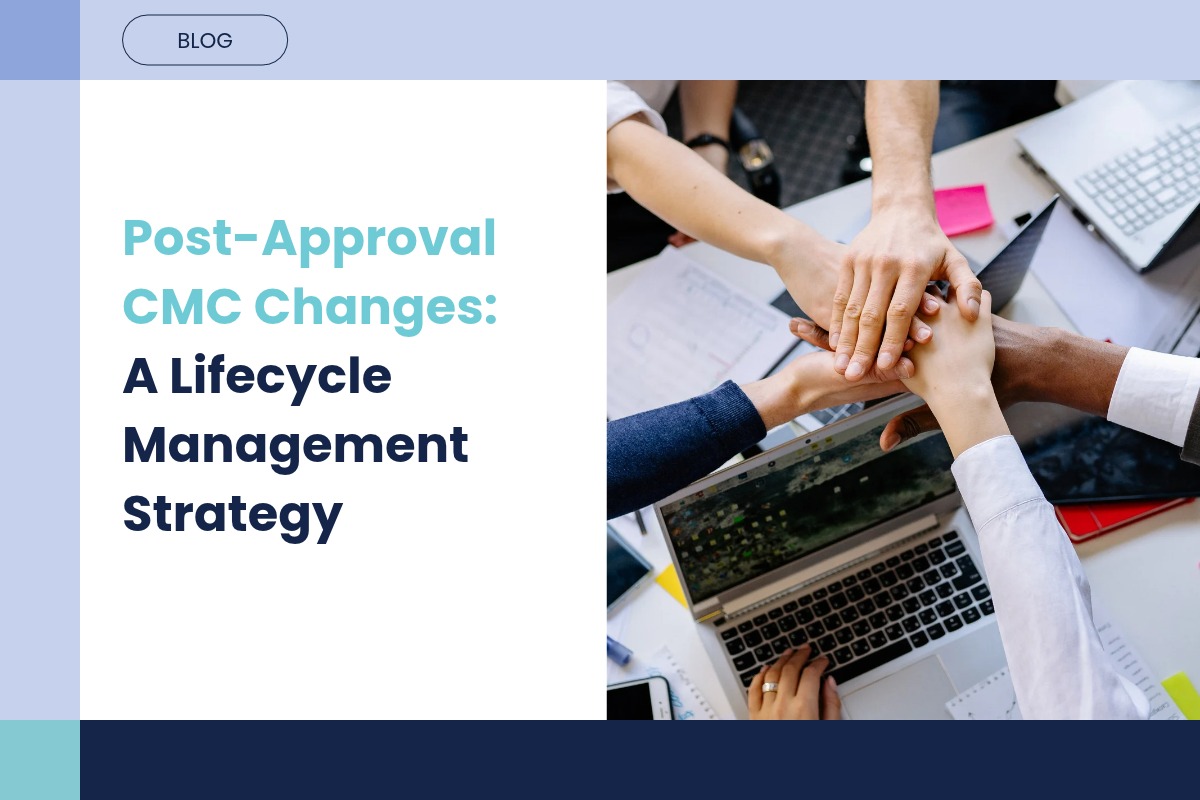
Post-Approval CMC Changes: Why Lifecycle Management Becomes a Competitive Advantage
07 Oct, 2026
A proactive CMC lifecycle strategy can turn post-approval changes from a regulatory burden into an operational advantage.
Your Product Is Approved. What Comes Next?
After months, and often years, of development, documentation, and regulatory interactions, your drug product finally receives approval.
The team celebrates. Leadership focuses on commercial growth. New market opportunities begin to emerge.
Everything seems to be moving in the right direction.
Then the requests start arriving.
A manufacturing site needs to be added.
A supplier change becomes necessary.
A health authority requests additional information.
A product renewal deadline approaches.
A new market requires updated documentation.
Suddenly, the very success of your product creates a new set of challenges.
For many pharmaceutical and biopharmaceutical companies, obtaining approval feels like crossing the finish line.
In reality, approval is the starting line of a much longer journey.
And how effectively companies manage that journey often determines whether they simply maintain compliance or gain a true competitive advantage.
The Costly Myth: “The Hard Part Is Over”
Many organizations invest significant resources in obtaining their first approval.
What often receives less attention is everything that follows:
- Variations
- Renewals
- Manufacturing site changes
- Supplier changes
- Packaging updates
- Health authority commitments
- Global product maintenance
- Post-approval documentation updates
Individually, these activities may seem manageable.
Collectively, they can consume enormous amounts of time, resources, and effort if not managed strategically.
Without a structured lifecycle management framework, companies often face:
- Delayed implementation of business-critical changes
- Regulatory bottlenecks across multiple markets
- Repeated drafting and updating of similar documentation
- Increased compliance risks
- Slower response times to health authority requests
- Higher operational costs
The result is not just regulatory complexity.
It can directly impact business growth, supply continuity, and speed to market.
Why Lifecycle Management Is No Longer Just a Regulatory Activity
The most successful pharmaceutical companies don’t view lifecycle management as an administrative burden.
They view it as a business strategy.
A well-managed lifecycle allows organizations to:
- Implement manufacturing improvements faster
- Expand into new markets more efficiently
- Reduce regulatory risks
- Improve content reuse across submissions
- Maintain product compliance globally
- Support uninterrupted product supply
Simply put, strong lifecycle management creates operational agility.
And operational agility creates competitive advantage.
Five Ways Effective Lifecycle Management Drives Business Success
- It Enables Faster Implementation of Business Changes: Change is inevitable. Whether it’s adding a new manufacturing site, qualifying a new supplier, updating specifications, or expanding production capacity, companies need the flexibility to adapt quickly. Organizations with a clear post-approval CMC strategy can assess regulatory impact early and implement changes with confidence.Those without one often experience costly delays.
- It Simplifies Global Product Maintenance: Maintaining compliance across multiple markets can quickly become overwhelming. Different regions have different expectations for:
- Variations
- Renewals
- Regulatory commitments
- Documentation maintenance
A proactive lifecycle management strategy helps companies remain compliant while reducing duplication and administrative burden.
- It Maximizes the Value of Regulatory Content: Many organizations underestimate the effort required to continuously update and maintain regulatory documentation. Companies that establish structured content management and reuse strategies can significantly reduce workload and improve consistency across submissions. This saves both time and resources throughout the product lifecycle.
- It Improves Readiness for Health Authority Interactions: Questions from health authorities rarely arrive at the “perfect” time. Organizations with organized documentation, robust change management processes, and clear regulatory strategies are better positioned to respond quickly and confidently. Preparation often makes the difference between a smooth review and a prolonged regulatory challenge.
- It Protects Long-Term Product Growth: Every approved product will evolve. New markets, new manufacturing sites, process improvements, and business expansion opportunities all depend on effective lifecycle management. Companies that plan beyond approval are often the ones best positioned to maximize long-term product value.

How Celegence Helps Companies Plan Beyond First Approval
At Celegence, we frequently work with pharmaceutical and biopharmaceutical companies that realize post-approval activities require just as much strategic planning as the original submission.
Because successful products aren’t defined solely by obtaining approval.
They’re defined by how effectively companies manage growth, change, and compliance after approval.
Final Thoughts
The pharmaceutical industry often celebrates approval as the ultimate milestone.
But experienced regulatory professionals know the real challenge begins afterwards.
Every manufacturing change, regulatory commitment, market expansion, and product improvement becomes part of an ongoing lifecycle that must be carefully managed.
Organizations that approach post-approval CMC activities strategically are better positioned to reduce regulatory risk, improve operational efficiency, and accelerate business growth.
Approval may open the door. Lifecycle management determines how far a product can go.
Ready to Plan Beyond First Approval?
Whether you’re managing variations, preparing health authority responses, supporting global product maintenance, or developing a long-term lifecycle strategy, Celegence can help.
Partner with Celegence to transform post-approval CMC activities from a compliance obligation into a competitive business advantage.
AUTHORED BY

Senior Technical Writer - Regulatory Services (Pharma)
Priya Bolia

Other Related Articles

02 Oct, 2026

09 Sep, 2026

03 Sep, 2026