Why Are Pharma Companies Reconsidering RIM Ownership? The Rise of RIM BPaaS
Predictable CMC Costs Over Multi-Year Programs: Why Partnership Beats Project-by-Project Outsourcing
03 Sep, 2026
For small and emerging pharmaceutical companies, CMC (Chemistry, Manufacturing and Controls) is rarely a one-time activity. As a program moves from early development toward clinical and regulatory milestones, CMC requirements evolve and so does the need for specialized expertise, documentation, analytical support, process development, manufacturing and regulatory coordination.
The challenge is that many companies manage these requirements one project at a time.
At first, this can seem like the most flexible and cost-effective approach. But over a multi-year development program, repeatedly onboarding new providers can create hidden costs, duplicated effort and loss of valuable program knowledge.
A long-term CMC partnership offers a different approach: build knowledge once, preserve it, and use it repeatedly as the program advances.
The Hidden Cost of Project-by-Project Outsourcing
The cost of a CMC project isn’t limited to the vendor’s quoted fee. Every new outsourcing cycle can introduce additional activities:

The result can be a cycle of repeated onboarding, knowledge transfer and administrative effort.
For a single project, these costs may appear manageable. Across several years, however, they can become a significant source of inefficiency.
Why CMC Costs Become Difficult to Predict
CMC programs rarely follow a perfectly linear path. A development program may require:
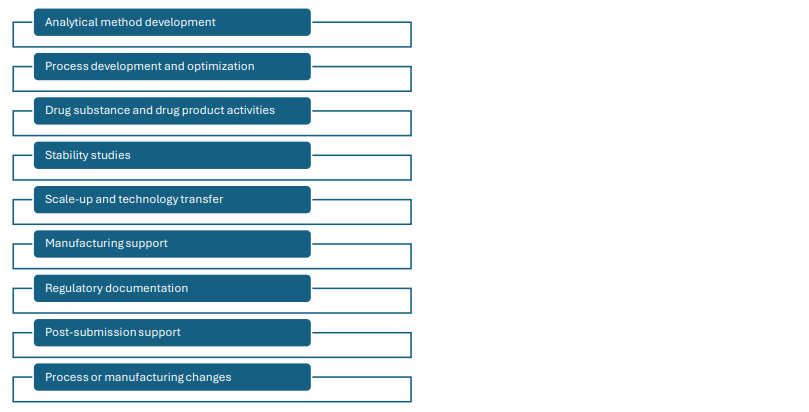
And requirements can change as new scientific, clinical or regulatory information emerges.
The Value of Institutional Program Knowledge
One of the most overlooked assets in a long-running CMC program is knowledge continuity. A partner that remains engaged over multiple stages can build familiarity with:
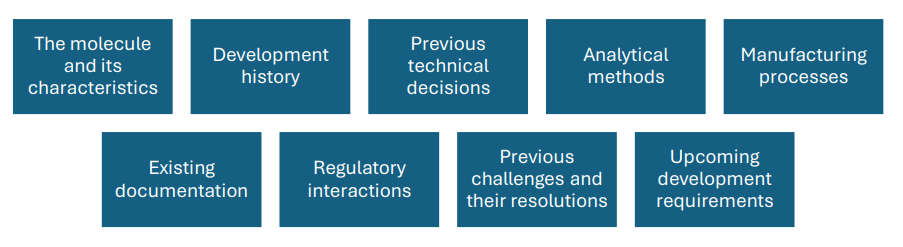
Instead of repeatedly explaining what happened before, the team can focus on what needs to happen next.
Knowledge Compounds Over Time
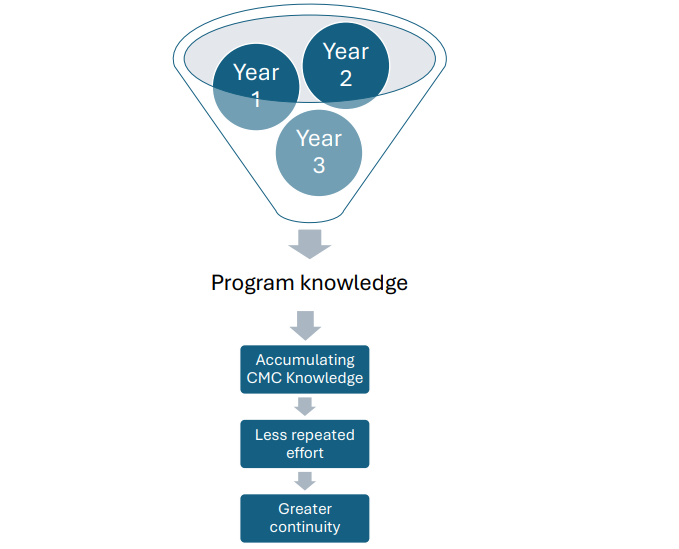
The knowledge generated during one stage becomes an asset for the next.
From Individual Projects to a CMC Lifecycle Partnership
The fundamental difference is the operating model.
Project-by-project outsourcing:

Long-term partnership
Program → Partner → Knowledge accumulates → Capabilities evolve → Program advances
Visually:
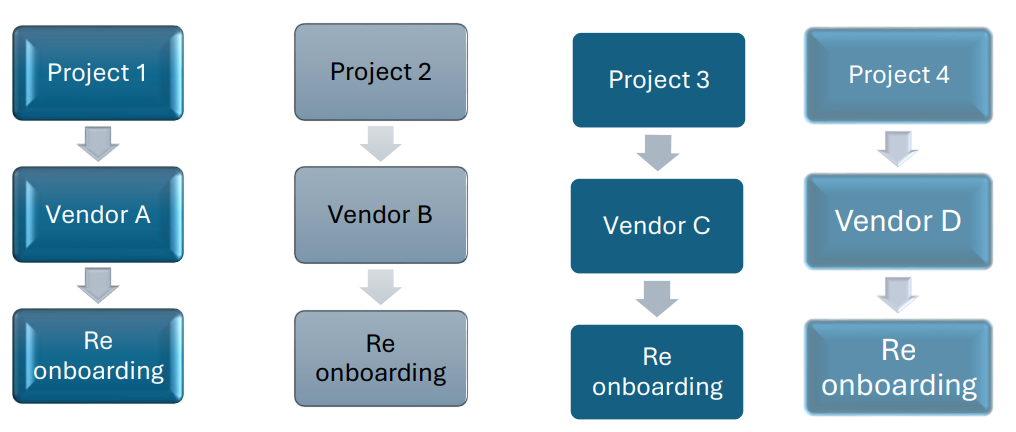
Project → Vendor Handover → Project Ends → Next Vendor → Repeat. Each transition creates an opportunity for cost, delay and information loss.
Each transition creates an opportunity for cost, delay and information loss.
How Partnership Can Reduce Avoidable Rework
Consider what happens when a new provider enters a program. The team may need to spend time explaining:
- What has already been done?
- Why was a particular approach selected?
- Which methods are currently available?
- What problems have already been investigated?
- What regulatory considerations influenced earlier decisions?
- Which documents and datasets should be treated as the current baseline?
When the same partner continues with the program, much of this context can already exist within the relationship and its knowledge-management systems.
The potential effect
Project-by-project approach
- Repeated onboarding
- Repeated knowledge transfer
- Higher transition effort
- More opportunities for duplicated work
- Separate project optimization
- Cost visibility at project level
Long-term partnership
- Established working relationship
- Accumulated program knowledge
- Greater continuity
- Greater potential for reuse
- Lifecycle-oriented optimization
- Better view across the program
Reusing Knowledge, Processes and Assets
A long-term relationship can also create opportunities to reuse what has already been developed. For example, knowledge generated during one phase may inform the next phase:
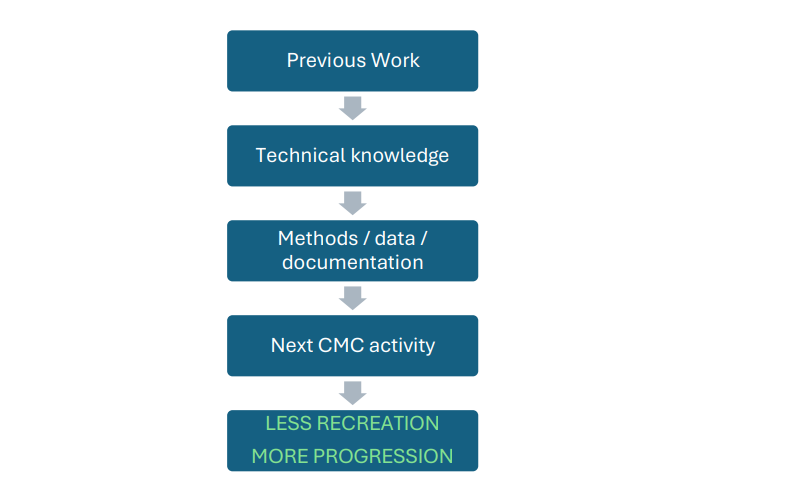
This doesn’t mean every method, document or process can simply be reused unchanged. CMC requirements must always be evaluated based on the specific scientific, technical and regulatory context.
But having the history available can make future decisions more informed and efficient.
Predictability Is About More Than Lower Prices
When pharmaceutical companies evaluate outsourcing partners, cost is naturally an important consideration. But focusing only on the price of an individual project can miss the larger picture.
A BETTER QUESTION IS:
What will this activity cost us across the entire development lifecycle?
Consider two hypothetical approaches:
1. Individual project cost:
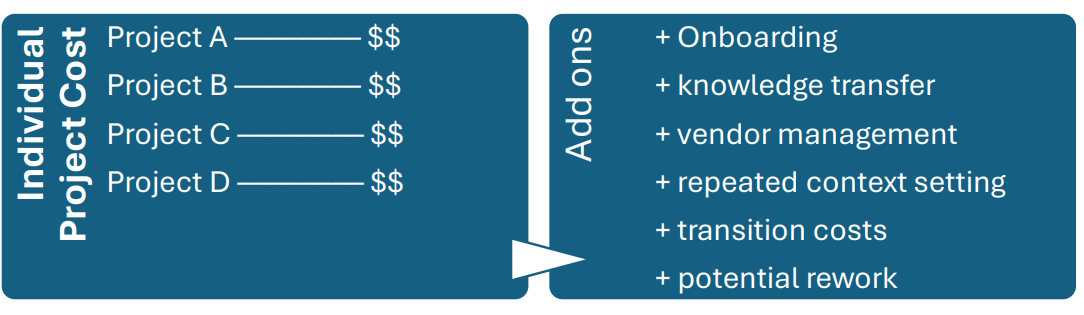
2. Lifecycle Partnership:
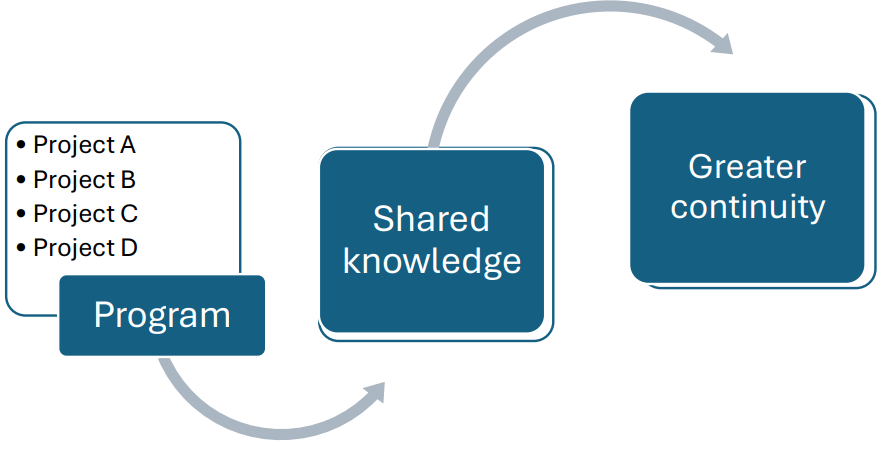
The objective isn’t necessarily to make every individual project cheaper. It is to reduce unnecessary costs across the program as a whole.
WHAT SHOULD A MULTI-YEAR CMC PARTNERSHIP INCLUDE?
A successful partnership should be more than simply signing a longer contract. It should establish a framework for continuity, accountability and flexibility.
- Clear governance: Define who owns decisions, how issues are escalated and how program priorities are reviewed.
- Transparent cost structures: Develop a clear understanding of recurring activities, variable requirements and potential changes in scope.
- Knowledge management: Make sure program knowledge, decisions and documentation are captured and accessible rather than remaining dependent on individual people.
- Continuity of expertise: Where possible, maintain continuity in the teams supporting the program.
- Flexibility: A multi-year partnership should accommodate changing development priorities rather than forcing every future requirement into today’s assumptions.
- Lifecycle thinking: CMC activities should be viewed in the context of the next milestone, not merely the completion of the current statement of work.
A SIMPLE FRAMEWORK FOR SMALL PHARMA
Before choosing between project-based outsourcing and a longer-term model, companies can ask five questions:
- How often will we need this expertise? If a capability is likely to be required repeatedly, a longer-term relationship may offer advantages.
- How much program knowledge is being recreated? If every new project requires substantial time to explain historical context, there may be an opportunity to improve continuity.
- What can be reused? Look beyond physical assets. Consider methods, documentation, data, processes, lessons learned and institutional knowledge.
- What happens between projects? A partnership should have a plan for maintaining knowledge even when there is a gap between active work packages.
- Are we optimizing the project or the program? This may be the most important question of all.
The Bigger Picture: CMC as a Lifecycle, Not a Collection of Projects
Small pharmaceutical companies operate under significant resource constraints. Every dollar, every month and every technical decision matters. That makes an efficient CMC operating model particularly important.
The choice isn’t necessarily between “cheap outsourcing” and “expensive partnership.” The more useful comparison is short-term vs lifecycle view:
- Short-term: “What does this project cost?”
- Lifecycle view: “What does it cost to move this program successfully through multiple CMC milestones?”
A long-term partner can potentially help answer the second question by maintaining context, building institutional knowledge and reducing the need to repeatedly start from zero.
CONCLUSION: PREDICTABILITY COMES FROM CONTINUITY
For small pharma, CMC outsourcing doesn’t have to be a series of disconnected transactions. When the same partner supports a program across multiple stages, the relationship can become a source of accumulated knowledge, operational continuity and reusable capability.
That can help reduce avoidable rework, simplify transitions and provide a more holistic view of CMC costs over the life of a development program.
Ultimately, the goal of a multi-year CMC partnership isn’t simply to negotiate a better price for the next project. It’s to create a better way of working across every project that follows.
READY TO THINK BEYOND PROJECT-BY-PROJECT CMC?
If your development program is expected to require CMC, regulatory and manufacturing support across multiple milestones, it may be worth evaluating the partnership model not just the next vendor.
Talk to our Celegence team about multi-year regulatory and CMC partnership models designed to preserve program knowledge, support continuity and improve cost predictability across the development lifecycle.
Think Beyond the Next CMC Project
Your CMC requirements will evolve as your development program advances. Your regulatory and technical knowledge shouldn’t have to start over each time.
A lifecycle partnership can help preserve program knowledge, reduce repeated onboarding and knowledge transfer, improve continuity, and provide better visibility into CMC requirements and costs across upcoming milestones. The blog itself emphasizes that the objective is not necessarily to make every individual project cheaper, but to reduce unnecessary costs across the overall program.
Celegence supports small and emerging pharmaceutical companies with regulatory and CMC expertise across the development lifecycle helping teams move from one milestone to the next with greater continuity and fewer disconnected handoffs.
AUTHORED BY

Associate II
Amithkumar B S

Other Related Articles
07 Oct, 2026

02 Oct, 2026

09 Sep, 2026

03 Sep, 2026