
AI-Enabled Clinical Evaluation Reports (CERs): Ensuring Predictable Costs Year After Year
Notified Body Opinion (NBOp) for Combination Products: Navigating Article 117 of the EU MDR
19 Aug, 2026
Understand when an NBOp is required, what Notified Bodies assess, and how to prepare device documentation that supports your EU marketing authorisation strategy.
Introduction
Drug-device combination products have always occupied the boundary between two regulatory frameworks, but until the EU Medical Devices Regulation (MDR) took effect that boundary was managed almost entirely within the medicinal product dossier. Article 117 of Regulation (EU) 2017/745 changed the position. The device constituent of an integral combination product is now the subject of a discrete, documented conformity assessment carried out by a Notified Body, and the resulting Notified Body Opinion (NBOp) has become a standing prerequisite for a substantial share of marketing authorisation applications in the EU.
The legal basis
Article 117 is a single amending provision. It revises Annex I, Section 3.2, point 12 of Directive 2001/83/EC so that an application for a medicinal product incorporating a device constituent must include evidence that the device part conforms to the relevant general safety and performance requirements (GSPRs) of Annex I of the MDR. That evidence takes one of two forms: the manufacturer’s EU declaration of conformity or the relevant certificate issued by a Notified Body where the device is CE marked, or, where neither is available, an opinion issued by a Notified Body designated for the device type in question.
The provision’s practical scope comes from secondary guidance principally the EMA guideline on quality documentation for medicinal products used with a medical device (EMA/CHMP/QWP/BWP/259165/2019), supplemented by the Team-NB opinion template and its position paper on post-authorisation device changes. None of it shifts authority: the marketing authorisation decision remains with the medicine’s regulator, and the notified body’s remit stops at the device constituent.
When does an NBOp apply?
The requirement is triggered by product architecture rather than by therapeutic area. It applies where a medicinal product and a device are placed on the market as a single integral, non-reusable unit and where the principal mode of action is pharmacological, immunological or metabolic. Pre-filled syringes, auto-injectors, pen injectors, metered-dose and dry-powder inhalers, and pre-filled infusion pumps are the typical cases; multi-dose presentations that cannot be refilled fall within the same criteria.
Products outside that architecture follow different routes. Co-packaged and referenced devices are CE marked and are addressed descriptively in the medicinal product dossier. Devices incorporating an ancillary medicinal substance remain device-regulated and are classified under Rule 14 of Annex VIII. Where an integral device constituent already holds a valid declaration of conformity for the same intended purpose, that documentation may be filed in place of an opinion, although a change of intended purpose or a significant design change will usually require reassessment.
One further condition is frequently overlooked. The amended provision calls for an opinion only where the device part, assessed on its own, would require the involvement of a notified body. A device that would be self-certified as Class I — non-sterile, without a measuring function and not reusable surgical, therefore falls outside the opinion requirement, even though conformity with the relevant GSPRs must still be demonstrated and documented in the dossier.
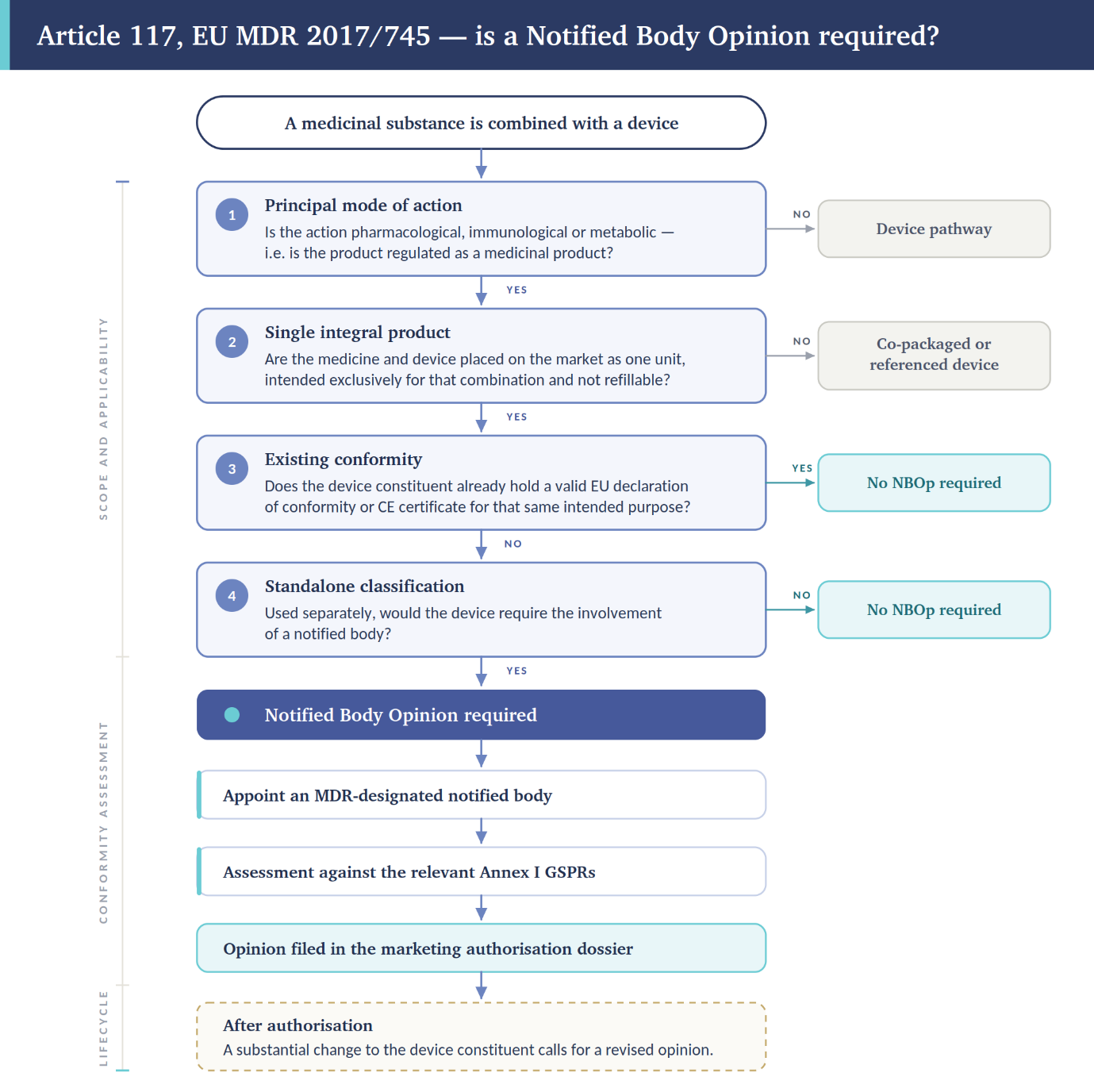
Figure 1 — Article 117 decision tree: determining whether a Notified Body Opinion is required.
Notified Body assessment Criteria
An Article 117 review is a technical documentation assessment against the applicable GSPRs, and nothing more. No CE certificate is issued, no CE marking is conferred on the combination product, and the Notified Body does not certify the applicant’s quality management system based on the opinion alone. Within that boundary, however, the expected evidence closely mirrors an Annex II technical file.
Assessors will look for the following, proportionate to the risk presented by the device constituent:
- A risk management file consistent with ISO 14971.
- Biological safety and materials characterisation under the ISO 10993 series, including extractables and leachables data at the interface with the medicinal product.
- Sterilisation and packaging validation.
- Design verification and validation covering functional performance, dose accuracy, delivered volume, injection force and container closure integrity maintained across the claimed shelf life.
- Usability engineering under IEC 62366-1, with particular attention to lay use and to any self-administration claim.
- Instructions for use and labelling.
- Where a GSPR is claimed not to apply, the justification must be documented rather than left implicit.
Process and timing
Capacity, not assessment complexity, is often the governing constraint. Notified Bodies designated under the MDR are listed in the NANDO database, but only a minority offer Article 117 services, and applicants commonly initiate contact and reserve a review slot several months — frequently around nine — ahead of the intended submission date. The review proceeds through documentation submission, deficiency questions and issue of a positive or negative opinion.
Sequencing against the medicinal product procedure requires deliberate planning. The opinion should be structured so that the medicines competent authority can rely on it directly, which is the rationale for the Team-NB template. Filing the opinion at the time of the marketing authorisation application is the lower-risk approach, particularly for short variation procedures; parallel review, with the opinion supplied during the assessment, has been used successfully but leaves less margin for deficiency cycles.
Lifecycle management
Article 117 obligations continue after authorisation. A change to the device constituent that could affect the safety or performance addressed by the GSPRs is treated as substantial and calls for a new or revised opinion in support of the corresponding variation. Assessment of substantiality should be risk-based and documented; the Team-NB position paper on variations, the lifecycle management section of the EMA guideline, the Commission variations guidelines, ISO 20069 and ICH Q12 together provide a workable framework. Not every documentation update meets the threshold, and marketing authorisation holders benefit from a standing change-assessment procedure rather than case-by-case judgement.
Practical implications
Where Article 117 submissions run into difficulty, the cause is rarely scientific. Deficiencies cluster instead in documentation: fragmented supplier and material evidence for purchased device constituents, an unclear division between pharmaceutical GMP controls and device-side sterilisation and design controls, usability files that do not substantiate a lay-use claim and notified body engagement begun too late to absorb a second round of questions. Each is avoidable, and each is more cheaply avoided than remedied.
Article 117 is therefore best understood as a documentation discipline rather than a scientific hurdle. Applicants who establish product architecture and principal mode of action at the outset, confirm the standalone classification of the device constituent, and treat the notified body’s capacity as a fixed constraint on the filing plan rather than a variable within it will find the requirement adds process without adding uncertainty. A documented GSPR gap analysis including justified non-applicability and a standing change assessment procedure complete that position, the latter mattering most because the second encounter with Article 117 usually arrives as a variation rather than a new application. The device constituent has become a regulated object in its own right; the applicants who fare best are those who resourced it as one before the dossier was written.
Preparing for an Article 117 Notified Body Opinion?
Article 117 readiness requires more than assembling device documentation at the end of drug development. Early assessment of device classification, GSPR applicability, risk management, usability, verification and validation, and Notified Body requirements can help identify gaps before they affect submission timelines.
Celegence supports pharmaceutical and combination product teams with Article 117 regulatory strategy, GSPR gap assessments, technical documentation, clinical and risk documentation, NBOp preparation, and lifecycle support.
AUTHORED BY

SME – Regulatory Affairs, Medical Device Services
Rohit Nehra

Other Related Articles

28 Aug, 2026
20 Aug, 2026

13 Aug, 2026
13 Aug, 2026
06 Aug, 2026

04 Aug, 2026